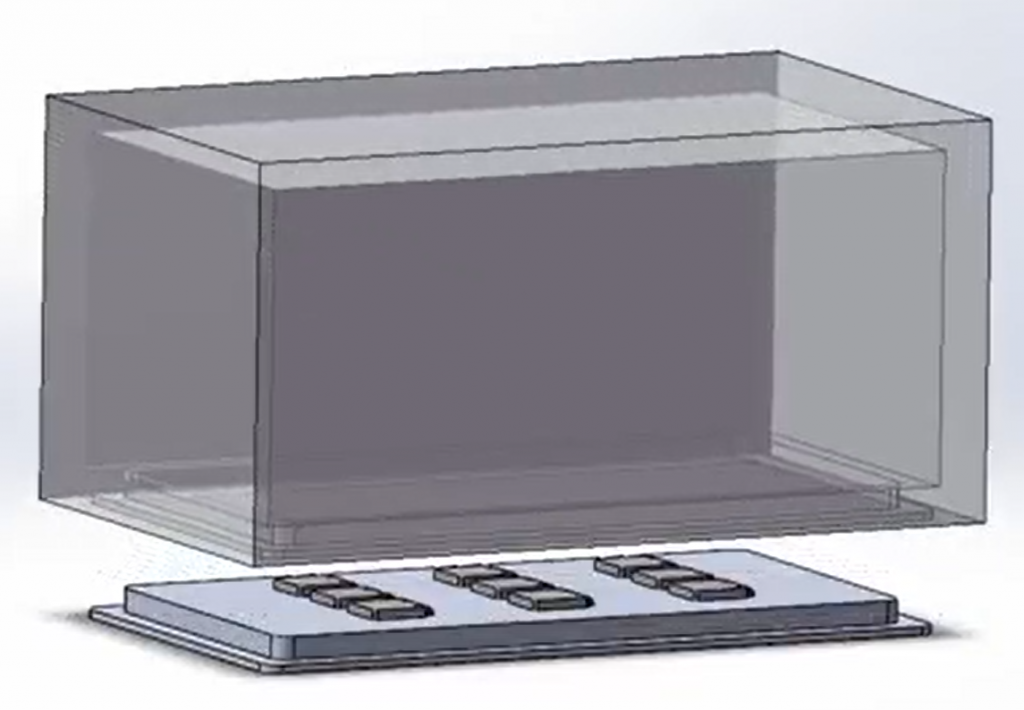
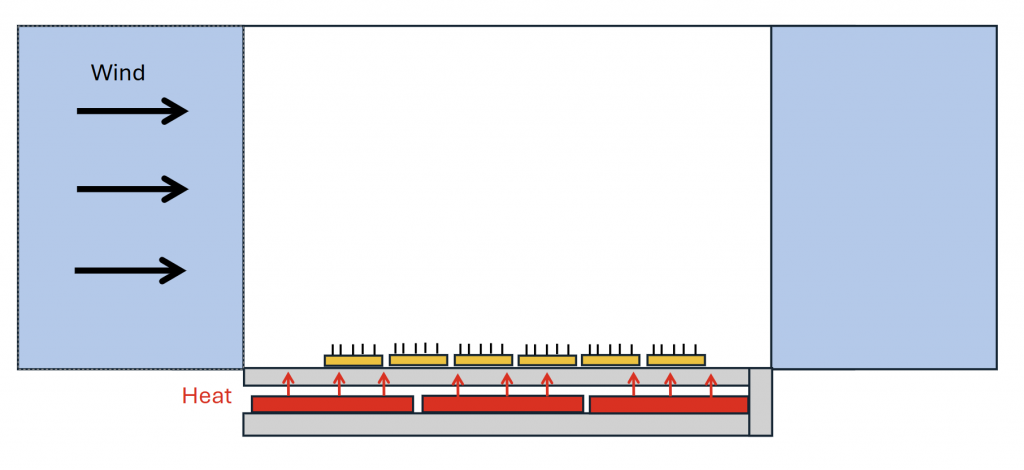
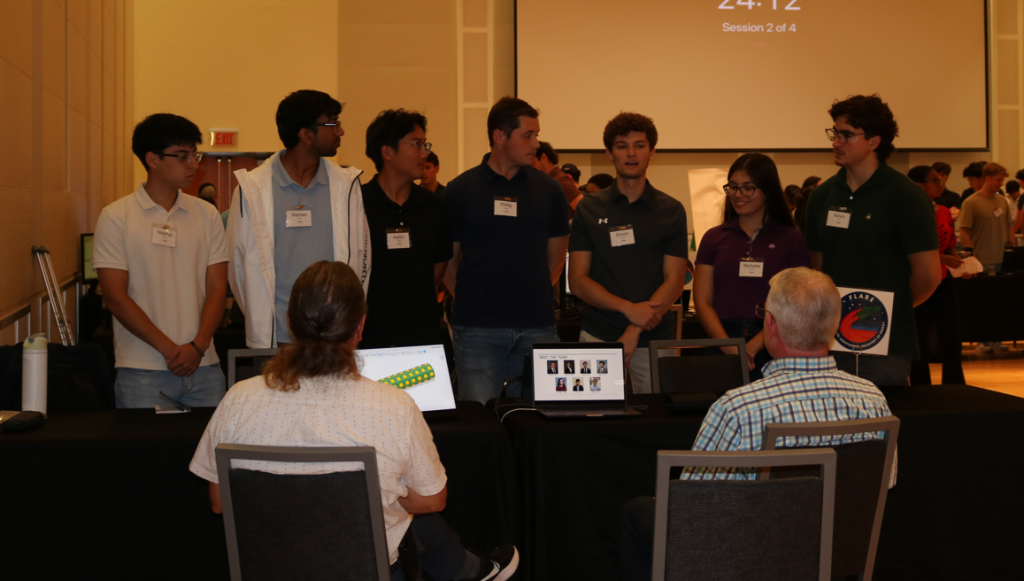
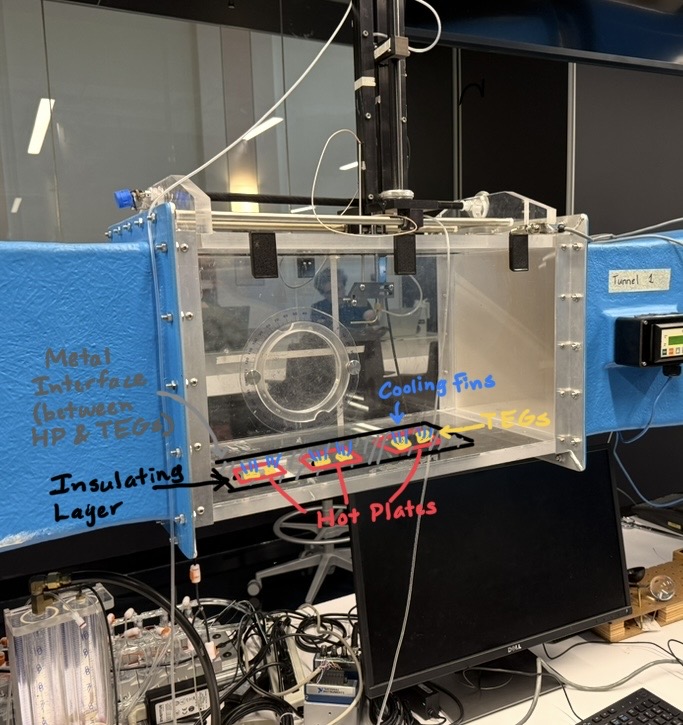
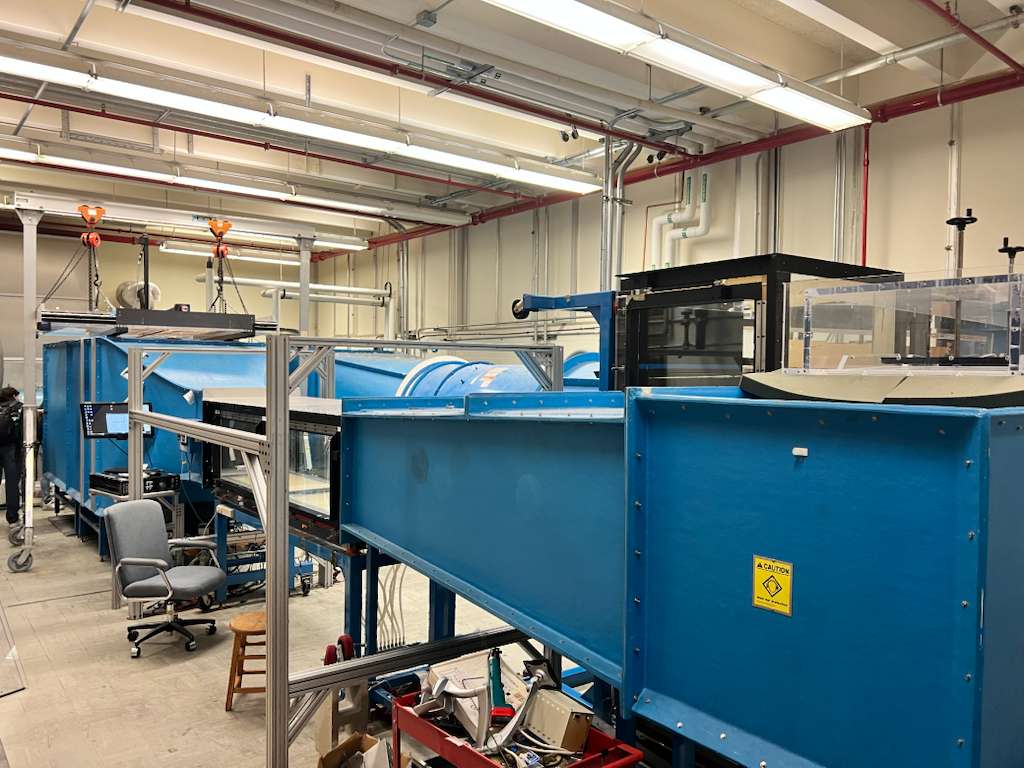
This week, we reviewed feedback from both our Peer Review SLDR and our coach. We were commended for implementing PID revisions effectively and delivering a more polished presentation. Our coach recommended adding an airflow-direction arrow to our model and expanding the background on device design to better clarify scope, including how TEG efficiency correlation informs GE Aerospace’s future decisions. We also explained our use of the Raspberry Pi for additional DAQ channels. Sketches for the aluminum wind-tunnel insert are nearing completion, and our next steps focus on addressing all SLDR comments.
Blog Posts
Week 14: SLDR
Week 13: Week of SLDR Peer Review

On Tuesday, 11/18/2025, the FLARE team met to finish preparing for our Peer Review SLDR presentation. We worked on finishing both our SLDR report draft and the presentation to clearly communicate our current design and testing plan. Moving forward, we will calculate heat transfer models and finalize our SLDR materials.
Week 12: PR SLDR Preparation

On Monday, 11/10/2025, the FLARE team met to continue preparing for our Peer Review SLDR presentation. We worked on drafting our SLDR report and refining the presentation to clearly communicate our current design and testing plan. We also met with our coach and liaison to review content and consult on testing procedures. Our coach confirmed flexibility in how we attach our system to the wind tunnel, and we shared this update with our liaisons to give them a clearer picture of our approach. Moving forward, we will calculate heat transfer models and finalize our SLDR materials.
Week 11: prototype inspection day

This week, we presented our current design iteration for Prototype Inspection Day. We received a lot of beneficial feedback from subject matter experts. We’d like to thank all who attended. Moving forward, we plan on developing a CAD model for our testing setup and working on preliminary heat transfer calculations. In our coach and liaison meetings we outlined some updated testing procedures and gathered new information on the wind tunnels we will use. This will directly influence the testing process next semester.
Week 10: PID Preparation

On Tuesday, 10/28/25, we met as a group to discuss updating our plan for protype inspection day (PID). We used our coach meeting to discuss preliminary testing schematics we created and got beneficial feedback. A large part of this discussion focused on flow characteristics. During our liaison discussion we covered topics related to data acquisition. Today, we submitted our first batch of 3D prints today to aid in visual demonstration of our proposal.
Week 9: Scoping out testing facilities

On Tuesday, 10/21/25, we met as a group to discuss updating our PDR, create a testing plan, and outline our required materials for prototype inspection day. We ordered a TEG demonstrator with an LED light attachment to demonstrate the concept of the Seebeck effect for an easy to understand, in person demo. On Thursday, 10/23/25 we met with our coach, Dr. Carroll, in person to explore testing facilities. We explored multiple wind tunnel test facilities, rooms where we could work on our prototype, and areas we can use for storage. We wrapped up the week with a meeting with one of our liaisons to discuss these updates.
Week 8: PDR Presentation

On Monday, 10/13/25, we presented our PDR to our GE Aerospace liaisons in Cincinnati, Ohio. We had a great day on-site, starting at 8:00 AM. Our presentation was met with insightful discussions and helpful questions. We were given great tours of different buildings within the GE Aerospace headquarters. We got to see control rooms, manufacturing, assembly, and testing facilities. Additionally, we were given a tour of the historic learning center which houses significant technology. We’re working to quickly implement the feedback from our presentation to output a final version of our report.
We’d like to express our gratitude to the IPPD and GE Aerospace staff for making this trip possible!
Week 7: Internal PDR Presentation

This week we presented our preliminary design report (PDR) to three other IPPD groups, coaches, and staff. This was a great opportunity for our team to display our hard work and receive constructive feedback. Constructive questions from the audience are pushing us to deepen our technical analysis and better justify our strategic decisions. Moving forward, we will implement the lessons learned from this practice run into our final PDR presentation next week in Cincinati, Ohio.
Week 6: Thermoelectric Generator Update

The team faced a significant problem that they had to address this week. We contacted the supplier of the high temperature thermoelectric generator (TEG) we were interested in acquiring and found out it is no longer being produced. Fortunately, we were able to talk with a subject matter expert and gain lots of valuable insight. After meeting with our coach and liaisons, we have decided to still pursue the TEG concept with our immediate focus on researching the feasibility of creating such a device, including exploring materials like silicon carbide, and investigating how results could be scaled up from a lower temperature device. While working together, we also created the preliminary design architecture for our project. Lastly, the team finalized plans for visiting the GE Aerospace site in Cincinati, Ohio and presenting the preliminary design report.
Week 5: Idea Generation

This week the team met to discuss different ways we could address our scope of work. At the team meeting, each member presented one (or more) ideas that could be used as solutions to the problem of waste heat. Through this process we were able to derive a few concepts that moved forward in crafting a decision matrix. We also started working on a draft of our preliminary design review. On an aerodynamic level, we strengthened our understanding of the isolator and engine bay flow states which will be beneficial moving forward.
Looking to next week, we’ll be meeting with one of our liaison engineers in person. Additionally, we’ll be focusing on calculating quantitative values for our concepts to benefit both the decision matrix and specifications/requirements.