Blog Posts

Brick by Bit – Week 18 Blog Post

This week, Team Brick by Bit made significant progress across hardware, software, and deployment planning. On the hardware side, we completed three 3D test prints to refine our PCB enclosure design. We began with simple box models to determine proper tolerances, ensuring the PCB fits securely without being overly tight. These prints also allowed us to test support settings and evaluate overall print quality. In addition, we fully assembled and configured the 3D printer, which took considerable time. To streamline future work, we created detailed step-by-step documentation so team members can easily operate the printer moving forward. Additionally, we verified that our custom-built PCB works properly with connected sensors. After resetting the gateway, we confirmed that nodes are now successfully transmitting data at timed intervals.

On the software side, we established the initial email alert pipeline. We successfully configured automated emails to send to a designated contact list. This system will later integrate with MQTT broker sensor data, triggering alerts if readings fall outside predefined safe ranges. We also deployed our current dashboard to a cloud instance, making it accessible through a live link. As we prepare for field deployment, we researched purchasing a public domain to ensure reliable access during our construction site rollout in the coming weeks.

Finally, we coordinated with our liaison to schedule our first construction site visit to survey the area and consult with project managers.

This is a picture of Austin with the first printed PCB box.

Brick by Bit – Week 17 Blog Post

This week, Brick by Bit made some solid headway across both hardware and software as we continue refining our system. The team tackled enclosure design, got key hardware components working, and cleaned up nagging database issues.

On the hardware side, we’ve got a rudimentary enclosure model for the node PCB finished in OnShape, which is exciting because it means we’re moving from abstract design to something we can actually print and test. Even better news is that the radio on the node PCB is working, which validates a critical part of our wireless communication setup. For software, the project detail page is now pulling and displaying real data instead of placeholder information, which makes the whole system feel more legitimate and helps us catch integration issues we couldn’t see before.

Next week, we’re planning to do a test print of the preliminary enclosure to see how the design holds up in physical form. We’ll also test the sensors on the node PCB now that the radio is functional. On the software side, we will continue implementing backend calls for adding and deleting projects on the project page. We’re also tackling infrastructure by properly configuring Docker, firewall settings, access control, and network access in our cloud environment.

We’d like to plan a visit to the Chemical Engineering building construction site to scope out the deployment environment and understand what conditions our system will actually face. We’ll also need some help coordinating the enclosure test print to make sure we’re using the right equipment and settings. Things are coming together nicely as we move closer to having integrated hardware and software ready for field testing.

Brick By Bit – Week 16 Blog Post

This week brought solid progress as we continue building out our IoT gateway system for real-world deployment. The team tackled everything from security upgrades and enclosure design to backend improvements and hardware assembly, moving us closer to a system that can actually survive on a construction site.

For software, we began exploring a new WebSocket management system that can handle multiple sensors at once, which is essential as we scale up from our single-node prototype. This will make our backend much better at processing real-time data from distributed sensors. Meanwhile, the soldering work on our new PCB boards is ongoing, getting us closer to having complete sensor nodes ready for testing.

We have also been researching 3D printing filaments for our node enclosures, comparing options for UV resistance, temperature tolerance, and durability since these will be sitting outside in the elements. We also started working in SolidWorks to design the physical enclosures that will house our sensor nodes.

Next week, we’re planning to wrap up the SolidWorks enclosure model, finish the API calls for individual project pages, and keep pushing on the multi-sensor WebSocket system. PCB assembly will continue as well, so we have hardware ready when it’s time to integrate everything. The project development is picking up momentum as we shift from proof of concept to something we can actually deploy.

Brick by Bit – Week 15 blog Post

This week included a combination of hardware progress and backend infrastructure work. A PCB was fully soldered and assembled, but testing is currently blocked due to discovering that the battery connector size was incorrect. While frustrating, assembling the board early helped catch this issue before moving further into validation, and once the correct battery arrives the system will be ready for immediate testing and bring-up.

On the software side, the backend stack saw significant improvements. ChirpStack and the MQTT broker were moved into Docker containers to simplify deployment and ensure consistent environments across systems. JWT-based authentication was completed, bringing the backend closer to a secure, production-ready state. In addition, a setup meeting was scheduled with a professional software engineer to review backend infrastructure decisions and get guidance on architecture and scalability moving forward.

Brick By Bit – Week 14 Blog Post

Over winter break and during our first week back, the Brick by Bit team made strong progress across hardware, backend, and website development. This stretch was focused on closing out major tasks that had been in progress and setting a solid foundation for integration moving forward.

Over break, a major milestone was completing the latest revision of the Brick by Bit node PCB. The schematic and layout were finalized, interfaces were verified, and the design was locked in for fabrication. With the PCB complete, all required components were selected and ordered so that assembly and bring-up can begin as soon as parts arrive. On the backend side, we implemented database access policies to control how data is read and written, and we tested these policies to ensure permissions and data isolation behave as expected. We also completed the initial implementation of user authentication using JSON Web Tokens (JWT), enabling secure login and authenticated access throughout the system.

This week marked our first full team regroup after break. We met to re-coordinate, review what had been completed, and realign responsibilities so everyone is synced up heading into the next phase of the project. On the application side, we finished adding API calls for the Project page, allowing the new UI to pull and display real data from the database rather than static placeholders. With this integration in place, the Project page now reflects live backend data, bringing us one step closer to a fully connected end-to-end system.

Overall, the progress over break and this week has moved Brick by Bit out of planning and into a strong execution phase, with hardware ready for fabrication and software systems actively coming together.

Brick by Bit – Fall Semester Wrap Up

This week, team Brick by Bit finished out the semester strong with our official SLDR presentation. We enjoyed meeting other IPPD students, connecting with industry specialists, and sharing our project progress with the IPPD community.

As we conclude the year, let’s take a look at the highlights from the fall semester:

  • Delivered our PDR – Created interactions diagrams, component mapping, and action items to begin prototyping
  • Communicated with industry experts – Met with specialists to ensure we are meeting client needs
  • Completed end-to-end MVP – Established working LoRaWAN node –> gateway –> cloud pipeline with data flow
  • Built Supabase database and frontend – Developed a live data visualization dashboard with graphs and real-time node monitoring
  • Successfully demonstrated at PID (yay!) – Tested and validated prototype hardware and software integration
  • Planned sensor integration – Mapped out additional sensor requirements and PCB layout
  • Completed SLDR – Joined the other IPPD teams, liaisons, and coaches to present our system

We are heading into winter break with momentum, and a clear roadmap for PCB design and improved frontend/backend integration. The foundation we have built this semester is strong, placing us in the position to move toward a deployment-ready system. We will be testing our prototype under realistic conditions on an active construction site this December, which will give us more insight into technical refinement.

The Brick by Bit team would like to extend their gratitude to our coach, Dr. Janise McNair, our liaison, Dr. Aaron Costin, the IPPD staff, and the SCI lab team for their support and guidance.

Brick by Bit – Week 13 Blog Post

This week we finished our full draft SLDR and delivered a practice presentation to get early feedback from coaches and peers. We refined our messaging, tightened the architecture slides, and clarified the system-level interactions between the LoRaWAN node, the environmental sensors, the gateway, and cloud. Outside of SLDR prep, we also made significant progress on firmware and hardware development for our RAK3172-based environmental node. Firmware has been successfully brought up and we have begun the schematics for some initial custom PCB designs.

Brick by Bit – Week 12 Blog Post

This week was a busy one for team Brick by Bit, and involved many steps forward for both hardware and software.

This week was filled with many meetings for the Brick by Bit team. Within the SCI Lab, we reviewed several new sensors for environmental monitoring and made decisions on which modules to bring into our next round of prototypes. We also continued refining our dashboard design and officially began planning the layout for our first PCB. We finally met up with another researcher at the University that studies wireless charging of nodes throughout a farm, and a friend company that does some similar work to what we are doing in the lab.

The hardware team picked out particular sensors to order and begin integrating, a new micro-controller and LoRa chip/module, all to continue the beginnings of our first custom node PCB design. The software team is continuing to communicate with each other to develop a new dashboard, database schematics, and architectural plans for the next implementations.

Brick by Bit – Week 11 Blog Post

Week 11 was primarily focused on the PID event. We learned a lot of new things about our designs and where we should be heading when it comes to both the software and hardware of our gateway service. One of the things that stood out was the modularity of our node. Based on our discussion with various professionals, we decided that it would be best to have different types of nodes that come with a suite of sensors that can be activated depending on what you’d like to track. For example, one of the nodes will be for air monitoring, which contains various sensors within it such as temperature, humidity, and air pressure, among others.

This week, the software and hardware teams have coordinated and created their milestones for the project timeline. As of right now, software is focused on creating a schema for Supabase and implementing the first iteration of the database. We are considering migrating to PostgreSQL hosted on the cloud server for ease of development and management of the server, but for now we are sticking with Supabase. They are also focused on creating a new dashboard that builds upon the existing one that was made by a senior design team. Hardware is focused on integrating more sensors into the node such as air quality and pressure which will be parsed in the backend and sent to the database.

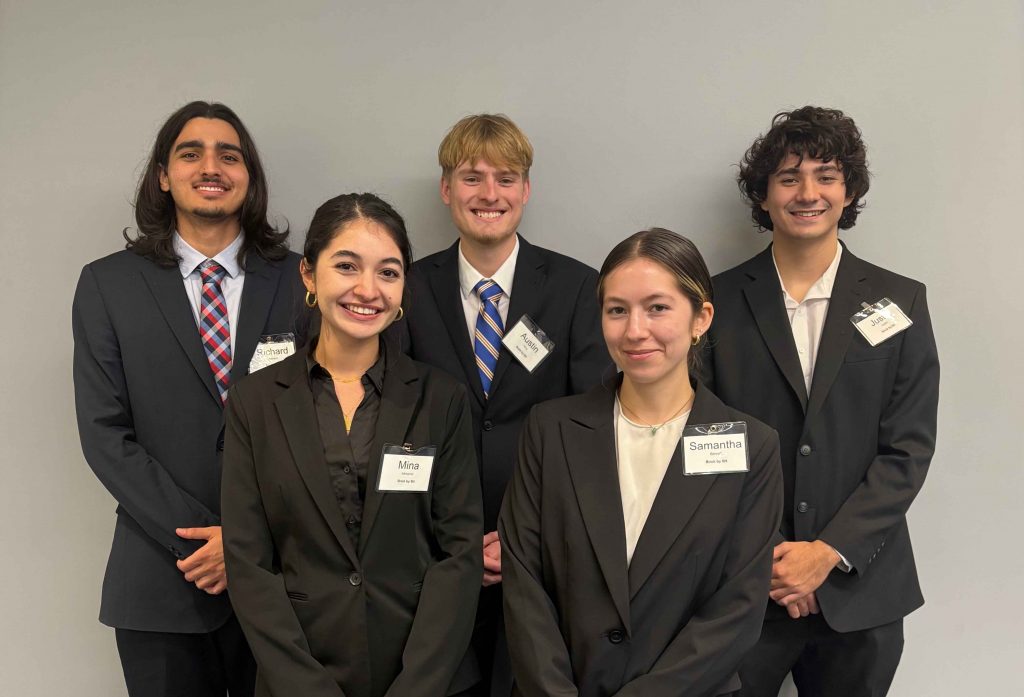
Brick by Bit presenting prototype. From left to right is Mina, Austin, Sam, Justin, and Richard

During our demonstration, we took a variety of notes, so we have a lot of information from professionals that can be used to improve our design.

After this event, we have much more knowledge on how we should conduct this project for the highest chance of success. We believe our project is very innovative, and could have a huge impact on the construction industry as a whole, so getting valuable advice from scholars that have experience in a variety of fields will help us achieve this goal.

Brick by Bit – Week 10 Blog Post

During week 10, our team has been focused on finalizing the prototype design for the PID event, as well as preparing our questions for the professionals we will be speaking with. We started splitting off into hardware and software teams, and have separate meetings for these aspects of the project. This marks a pivotal moment in our project lifecycle because it signifies that we are working more independently on different aspects of the project depending on our background and interests. Much of the previous weeks have been about planning and documentation, but the coming weeks will be more about implementation and hands-on development.

Something we accomplished this week was the instantiation of the cloud as well as deploying the Chirpstack LoraWAN network sever on the cloud. We also parsed the data from Chirpstack so that we can gather relevant details from the JSON file that has various fields about the node and chirpstack profile details. Therefore, we have a perfectly working demo for presentation purposes and have been working on gathering relevant questions about it.

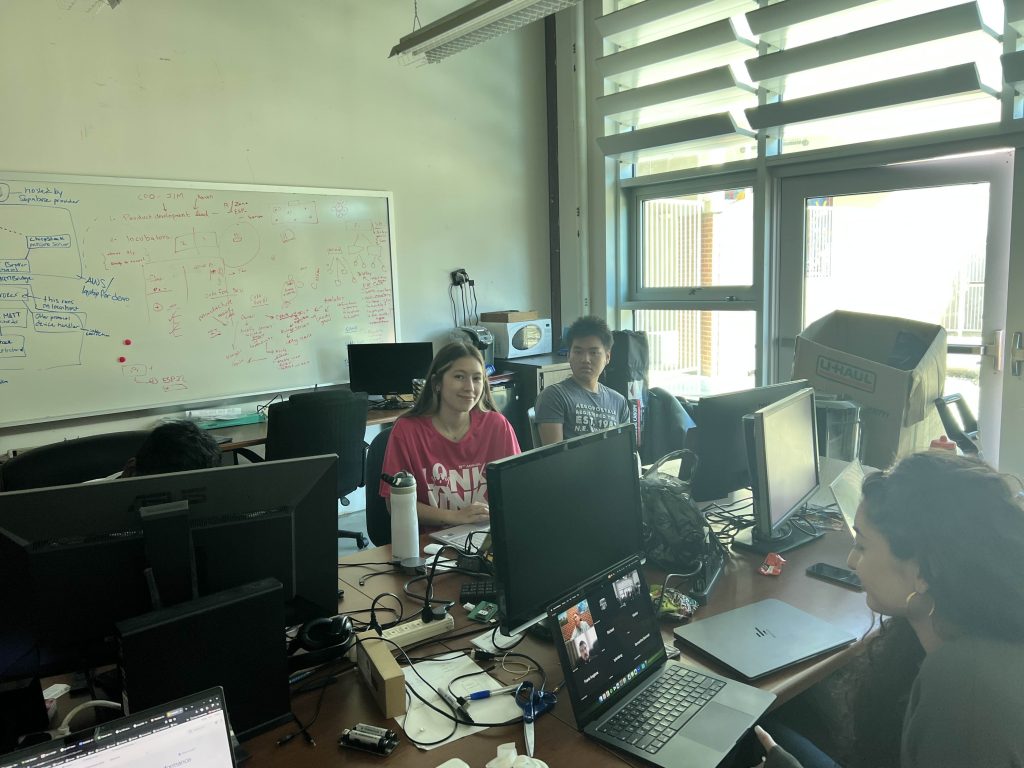
As shown, we are soldering in order to work on different pcb and sensor designs for our product. We have been making additions to the supabase database and are planning on adding different headers to data depending on the type of sensor being added to the system. As of now, we just have simple temperature and humidity readings showing.

After all these findings and additions to our prototype, we feel more than ready to present our design and gather valuable feedback from various professionals. All we have to do before this prototype is review the relevant information that we should be communicating in order to make the most use of our time at this event.