Blog Posts

Week 13: System Level Design Review

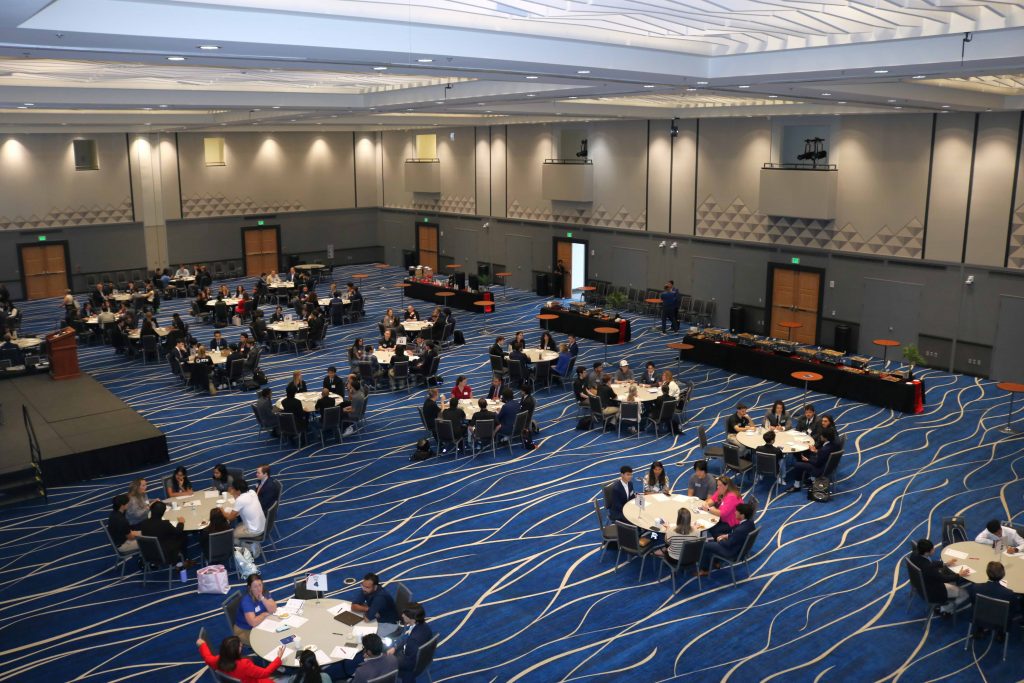
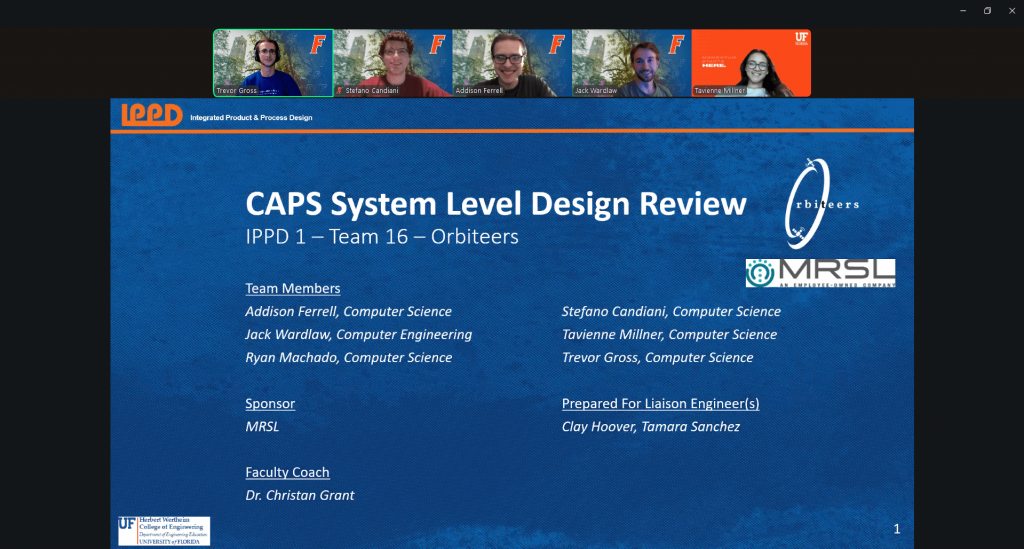
This week the Orbiteers completed their System Level Design Review (the document and the presentation)!! All the previous work from the Preliminary Design Review, Prototype Inspection Day, and the Peer Review Events led us to this monumental achievement. We presented the current state of our project to MRSL, Dr. Christian Grant, and Ann Marie Cassar-Chupa. We also had the amazing opportunity to connect with industry leaders at the events preceding the presentation and organized by the IPPD team.

Following the presentation, the Orbiteers discussed with MRSL what the immediate goals of the project are prior to the conclusion of the first phase of IPPD and what we can expect for the coming semester. We are all overjoyed with our achievements for this semester and cannot wait to see what is to come! Let’s finish strong Orbiteers! 

Tagged as:

Week 12: Almost Friday

We, the Orbiteers, delivered our Peer Review System Level Design Review (PR SLDR) this week to an audience of graduate students and professors. Our presentation was very well received, and the majority of the feedback was positive. Leading up to this event, we emphasized providing better context on our problem statement and breaking down the functionality in each module to facilitate understanding among our peers. Additionally, we developed new greedy tasking strategies to serve as baselines for our future work and resolved a few bugs in our program. We are extremely close to the end of the semester and the SLDR presentation, but are very excited to move headfirst into IPPD 2! Below is a picture of our team during this week’s SLDR practice presentation!

Tagged as: ,

Week 11: The Plot in Us

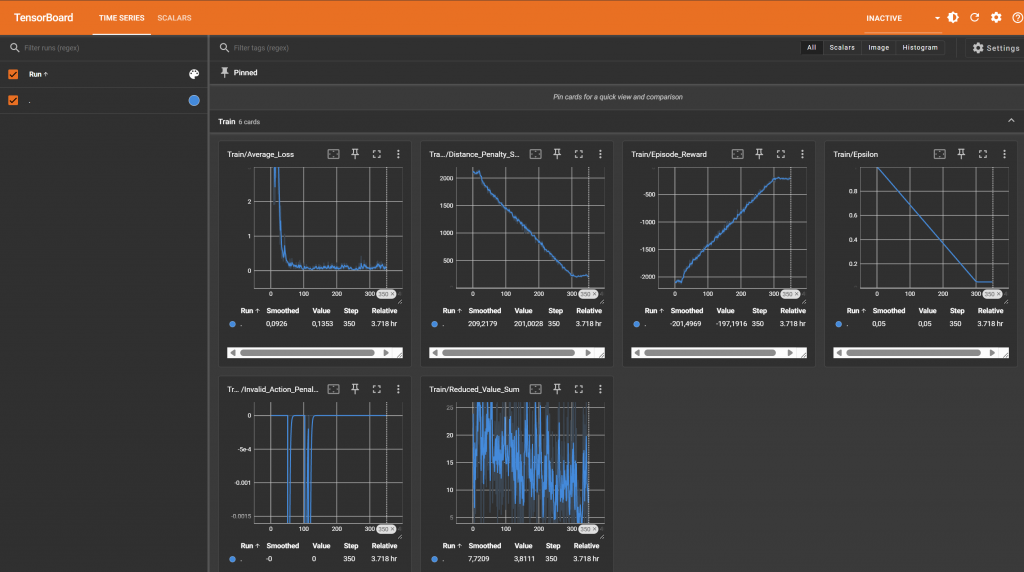
This was a week of code changes and end-of-semester preparations that kept us quite busy! We implemented plotting for our observation structure (OBS), missed targets, boresight vectors, and training metrics. Each of these will improve explainability in our project by allowing us to examine each step in our system. This is a luxury exclusive to us while our code is still on the ground. Once our work is in space, it will become astronomically more difficult to explore metrics! Below are some example plots of the OBS using Matplotlib and training metrics in TensorBoard, respectively:

Additionally, we have been working on our System Level Design Review (SLDR) drafting in preparation for our peer-review SLDR next week. The final SLDR presentation in a few weeks will be our last deliverable of the semester. It is crazy to be looking ahead to the end of IPPD 1 already, but we have loved the experience so far, and are excited to end strong!

Tagged as: , , , ,

Week 10: Prototype Inspection Day

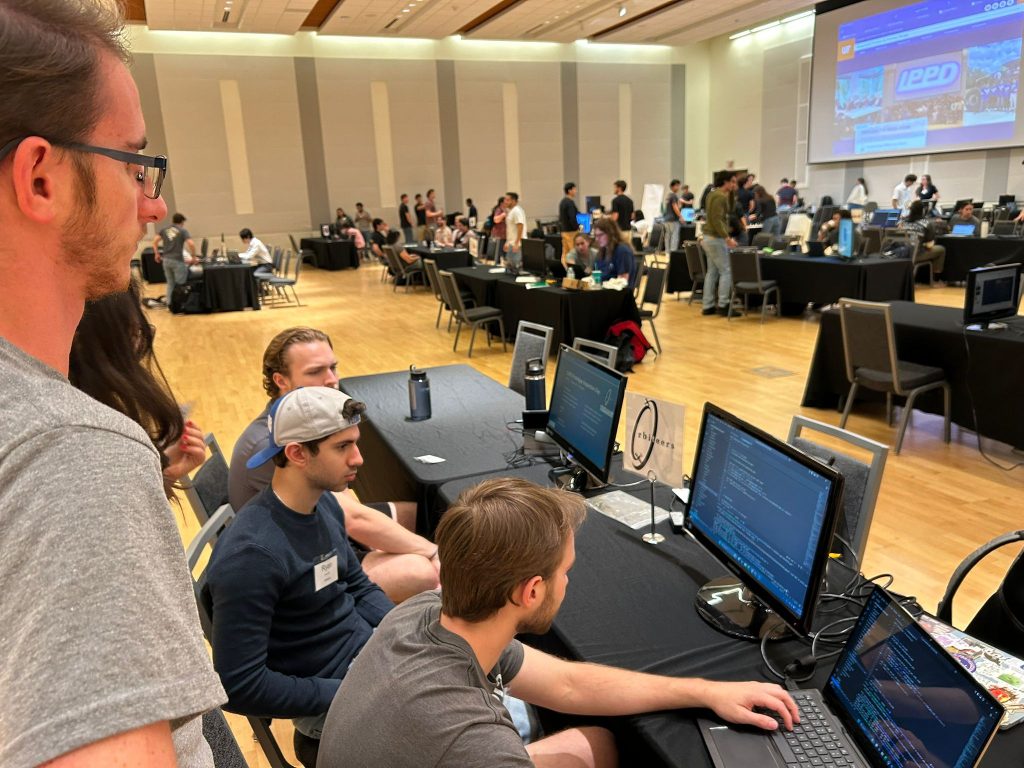
The Orbiteers had a fantastic time showing off our project at Prototype Inspection Day this week! A picture of us setting up our code to demo is shared below. We demoed our simulator prototype and received feedback from six UF faculty coaches with diverse backgrounds and knowledge. Their feedback was insightful and rewarding, and we are thankful for the experience. A few noteworthy recommendations we received include explaining more details about our precise steps to upgrade our prototype from a rule-based heuristic to reinforcement learning, instead of simply stating we are going to upgrade it. Also, more information about how we plan to compare and evaluate reinforcement learning strategies would’ve been helpful for the judges.

We made some code changes this week, too. They focused on improving the logging and metrics on the frontend display and the fidelity and organization of the backend simulator. Moving forward, we have more changes to keep upgrading our simulator in the coming weeks. We are also going to start working on our System Level Design Review (SLDR) and prepare for the peer review presentation. The end of the semester is coming fast, and the Orbiteers are moving onwards and upwards!

Week 9: Prototype Progress

This week, our team made significant progress on our satellite simulator in preparation for Prototype Inspection Day next week. In last week’s update, we shared our initial prototype of a basic rule-based system. This provided a solid foundation for an end-to-end simulation of satellite motion and tasking.

Since then, we’ve upgraded to a more realistic model that uses satellite state vectors instead of the previous grid-based propagation. This improvement allows the simulator to more accurately represent the orbital motion and system state over time, but maintains the basic rule-based decision-making. We also integrated it with a frontend view of the Earth, which will hopefully make our project and backend code easier to understand on Prototype Day. This frontend view is in the figure below. There is still plenty to do to upgrade this simulation in the coming weeks.

We’re excited to attend Prototype Day next week, show off our work, get feedback from UF faculty judges, and keep improving!

Simulation frontend screenshot.

Week 8: Observing Space

The Orbiteers were able to get the first rule-based closed loop working in a “toy box” environment! This accomplishment is a major step in the project since we now have a solid foundation to build off of. This first loop consists of several of the modules detailed in our system architecture and uses a grid-based approach for simplicity.

Figure displays the cumulative reward from our rule based solution running within the simulator_app.

We will progress the closed loop we have by using vectors and latitude-longitude coordinates instead of a grid which we hope to have done by Prototype Day.

Authored by Tavienne Millner, published by Stefano Candiani.

Week 7: Exploring Space

The Orbiteers put finishing touches on the Preliminary Design Report (PDR) and its accompanying presentation. Ryan and Trevor picked up the rental car on Wednesday night so that the Orbiteers could travel together in style to MRSL headquarters in Sarasota on Thursday!

We successfully presented our PDR and the engineers at MRSL had insightful questions that we plan to incorporate into our project and some of our project management tools (like an updated weekly Project Risk spreadsheet assessing if a risk in eminent or not). After our PDR presentation, the Orbiteers and MRSL got to have an extended planning session where we planned some of the structure of certain Pydantic models and how we want to organize the rest of the project to make the whole thing as modular as possible.

Below is a picture of the Orbiteers at MRSL!

Week 6: Liftoff!!


3…2…1… We have liftoff! With the finalization of our Preliminary Design Review and the presentation with feedback from our peers, we are ready to demonstrate our progress thus far and begin the programming development. Our visit at MRSL is on the near horizon (and high priority in our Observation Space, one might say) and we are excited to tour their space. This week we also developed initial rule-based prototype modules for a series of components of the project. Lastly, we began studying the documentation for simulator development using Cesium.js. Our meeting with our MRSL liaisons also proved very useful with further clarification of short term goals and how to improve our current prototype version of the modules.

Image of our peer review Preliminary Design Review. We are seen on the top right of the screen presenting in class. (From left to right: Trevor Gross, Jack Wardlaw, Tavienne Millner, Addison Ferrell, Ryan Machado, and Stefano Candiani)

Looking forward, we will be heading down to Sarasota and celebrating MRSL’s Independence Week and presenting the PDR. We will also work on the development of current module programs so we can then complete a preliminary loop of our design using Clay Hoover’s provided code and to have something ready for November’s Prototype Inspection Day! We are excited for our next great leaps!

Week 5: Final Launch Status Checklist

With a roadmap and a clearer system architecture, we are now performing final checks for launch! This week we have laid the groundwork for the project by finalizing our preliminary system architecture and defining specific inputs and outputs for each module under development. With these defined, we were able to ideate initial GitLab issues to “close the loop” and begin coding. With the developing Preliminary Design Review presentation and a structured understanding of what is desired from the Orbiteers, we are nearing readiness for development of the project. Our team has ironed out the details for our trip down to MRSL in a few weeks. Our meeting with MRSL this week further enlightened us on various of these topics and they have given us the go-ahead to start working on the project soon!

Screenshot from this week’s liaison meeting (10/02/25)

Looking forward, we are excited to practice our PDR presentation with our IPPD peers next week and applying all feedback from that to our official presentation two weeks from now! With coding issues under development, great things are soon to follow!

Week 4: Time to Launch!

Building off of last week’s achievements, the Orbiteers are counting down to launch! With the project goals and limitations defined after our in-person meeting with MRSL, we were able to draft our system architecture including the various inputs and outputs for our different modules and the data schemas. We also developed an initial draft of our Preliminary Design Review (PDR) document based on our previously developed documentation. With instruction from our MRSL team, we also finished defining our virtual environments in our individual AWS EC2 instances and we ran a simple simulation to test out functionality. Our third liaison meeting this Thursday was useful for better defining some of our schemas and has enlightened us in the next steps.

Looking forward, we plan to implement a basic version of our system architecture to “close the loop” and then work on optimizing each module from there. Contact with the MRSL team will be critical in these first few steps since it will help in the confusing initial stages of development. We are excited to begin programming and we cannot wait to see where our travels to!