Blog Posts

Shining the Light: Team 14 Wraps Up the Semester with SLDR Success

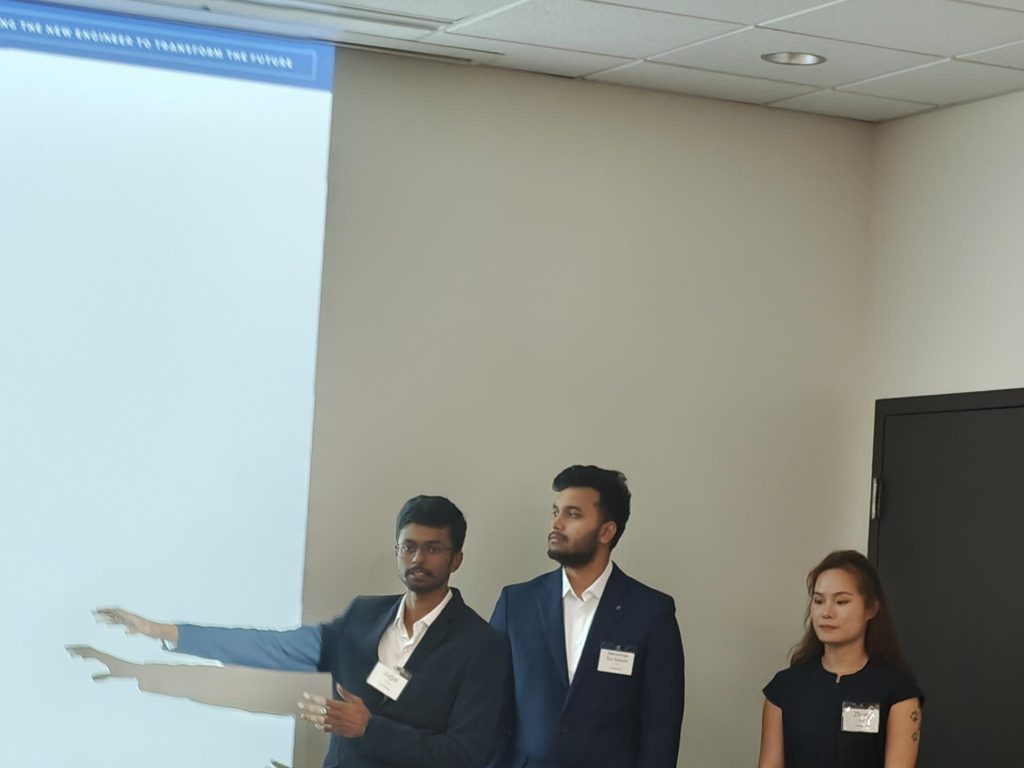
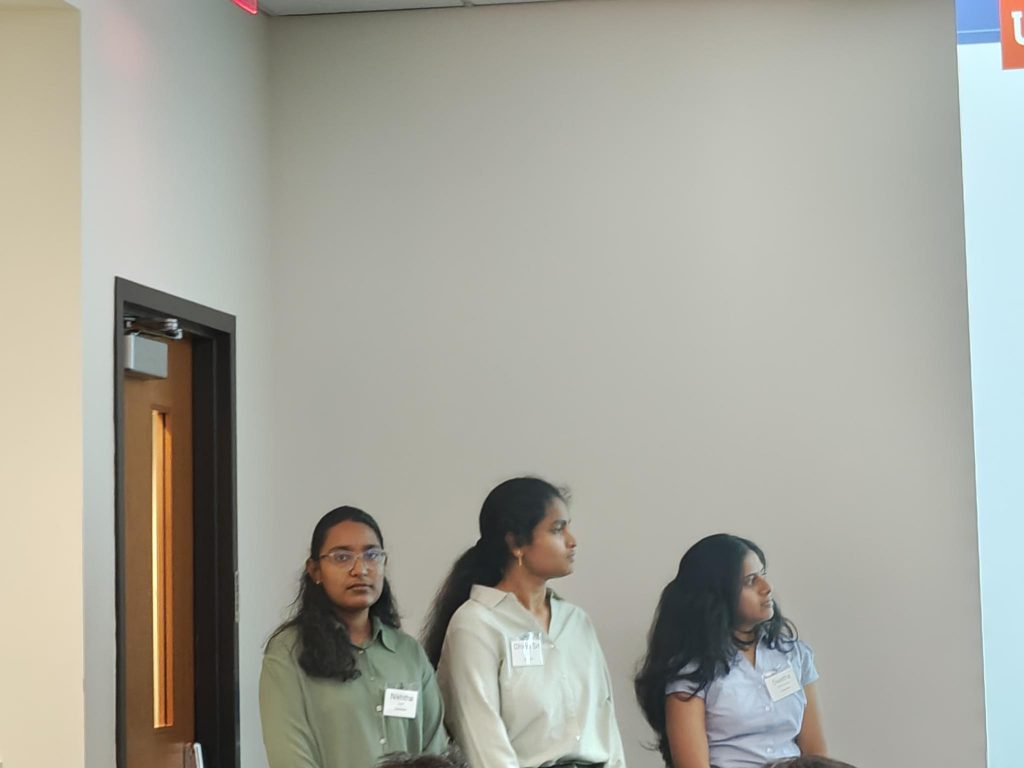
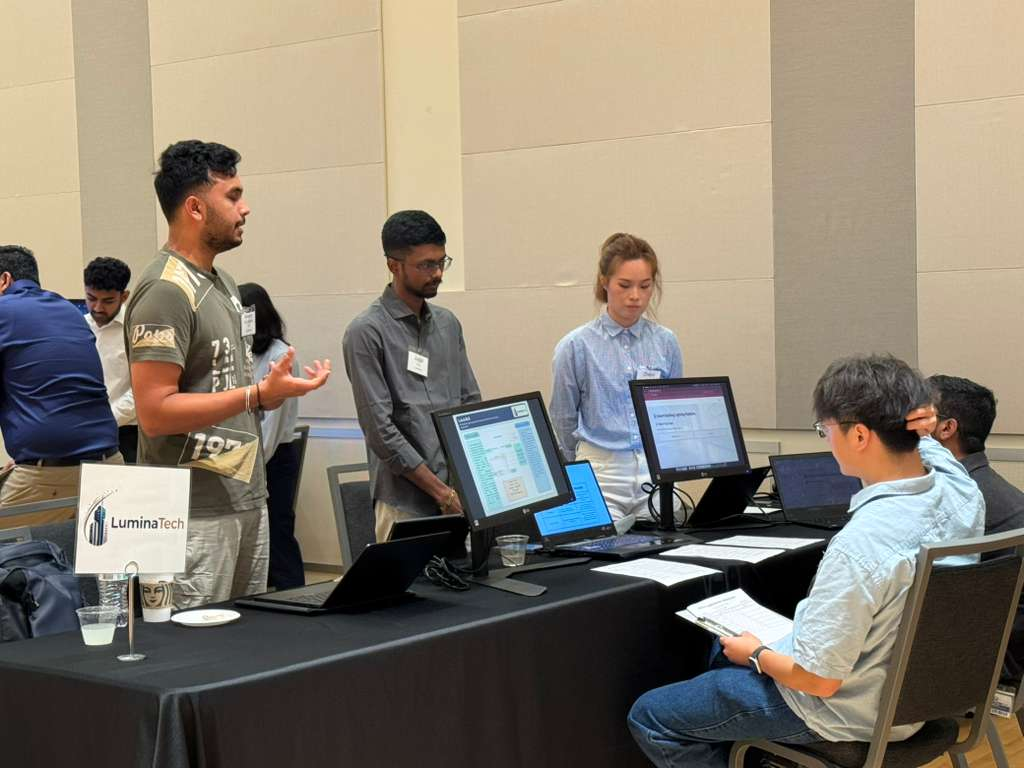
As the semester drew to a close, Team 14 brought months of collaboration, learning, and innovation together for our System Level Design Review (SLDR) presentation, a major milestone in the development of L.A.A.R.K: AI-Enabled Lighting Asset Management & Digital Twin Platform.

Bringing It All Together

Over the semester, our focus shifted from exploring possibilities to building structure, defining how our platform will manage lighting assets, predict maintenance needs, and support energy-efficient decisions. The SLDR gave us the space to reflect on this progress and demonstrate how our design is ready to move into development.

During the presentation, we walked our sponsor and faculty through our goals, progress, and lessons learned. The feedback we received highlighted our strong organization, clear communication, and forward-thinking approach to sustainability and smart-building innovation.

Lessons and Reflections

This semester was about more than just creating a product, it was about learning how to think like a team of engineers. From weekly meetings to planning sessions, we learned how to translate complex challenges into actionable steps and how to keep momentum even when data or direction was still evolving.

The SLDR was a proud moment that reminded us how much collaboration, adaptability, and perseverance can achieve. We closed the semester feeling confident in our vision and ready to bring our ideas to life in the spring.

Looking Ahead

Next semester, Team 14 will shift gears into implementation and testing, turning our design into a working prototype that facility managers can interact with and evaluate. We’re excited to take everything we’ve learned and continue building toward a system that makes lighting management smarter, simpler, and more sustainable.

L.A.A.R.K: Transforming Facility Lighting Management with AI-Enabled IntelligenceBuilding the Future of Smart Lighting: Inside LuminaTech’s

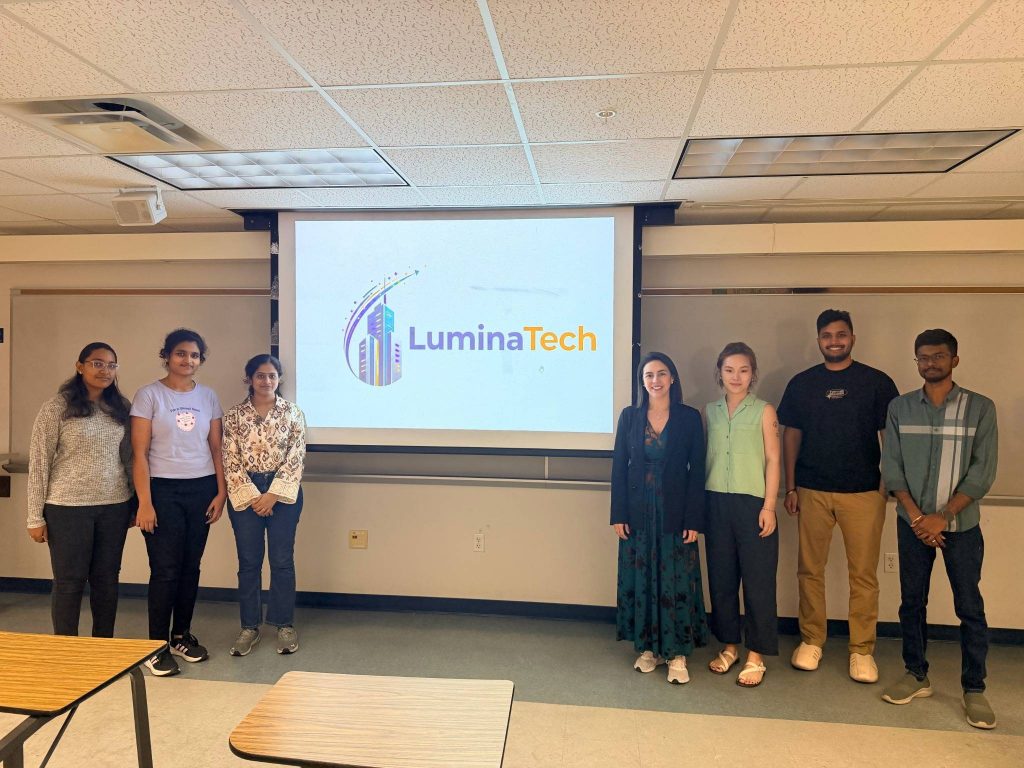
Team 14, LuminaTech, recently completed our SLDR presentation for the UF IPPD program, marking a major milestone in the development of L.A.A.R.K — an AI-Enabled Lighting Asset Management Platform designed to modernize facility operations.

Our team showcased how L.A.A.R.K integrates interactive floor-plan visualization, predictive maintenance powered by machine learning, and unified asset tracking to help organizations move from reactive repairs to proactive, data-driven decision-making. This combination of smart analytics and intuitive UI design aims to reduce maintenance costs, improve reliability, and simplify large-scale lighting management.

The feedback we received from faculty, coaches, and staff emphasized both the strength of our technical foundation and key areas to refine. Reviewers highlighted our clean UI prototype, clear problem framing, and strong understanding of predictive modeling. At the same time, they encouraged us to clarify our end-to-end data pipeline, strengthen our competitive differentiation, and improve speaker transitions for future presentations. We’ve already developed a concrete action plan—from adding a more detailed data flow diagram to rehearsing as a team and preparing fallback datasets to mitigate sponsor-data delays.

With this input, LuminaTech is entering Spring 2026 with renewed direction and momentum. Over the next semester, we will integrate real lighting-system API data, finalize our predictive model with automatic recalibration, enhance our web interface, and perform full system-level testing. We’re proud of the progress our team has made so far, and we’re excited to continue building a platform that brings meaningful, scalable value to facilities through innovation, intelligence, and design.

Turning PID Feedback into SLDR Momentum – Blog#11 11/14/2025

This week was about momentum and clarity. We aligned on the big picture, turning feedback into a sharper plan, and committed to a supervised learning direction for replacement prediction, with a stronger grounding in industry practices. That focus now guides our feature choices, validation approach, and prep for SLDR.

We sharpened our model direction this week: after PID feedback, we explored “mean lifetime” and industry practices (LM-80/TM-21) and chose a supervised approach for predicting replacement timing, using warranty and reference life as priors. We also clarified how vendors estimate expected life (LM-80 → TM-21), which guides our features and validation. On the UI side, Our team refined the flow (moving login confirmation), added colored bulb status to floor plans, linked product bands to purchasing, and surfaced brand/type with warranty life. Meanwhile, we compared backend frameworks to integrate models, database, and dashboard cleanly, sketching service boundaries and communication.

We finalized the SLDR structure and began drafting. The narrative follows Problem → Approach → Value, with concise sections on user needs and data sources (tested vs. reported specs). We’re assembling demo visuals: a clean system diagram (models ↔ database ↔ dashboard) and a floor-plan view where fixtures display predicted lifetime.

Moving Forward!!

we’re rolling updates into the Streamlit prototype based on recent feedback, for a smoother, and interactive UI. In parallel, we’ll continue model development with the new insights we gathered and visualize the model’s internal behavior and feature effects using Python-based explainability and plotting tools.

Reflection

This week we learned the power of focus and storytelling. Listening to feedback helped us see the big picture and choose a clearer path. We also learned how important it is to explain ideas simply, what matters to building managers, not just to us, and to keep the experience intuitive on the page.

Prototype Inspection Day (PID) – Blog#10 11/07/25

During​‍​‌‍​‍‌​‍​‌‍​‍‌ Prototype Inspection Day (PID), the LuminaTech team presented the prototype version of our predictive lighting system. We highlighted the on-demand UI dashboard, featuring role-based access, a floorplan viewer that is always up-to-date, and visual indicators for fixture lifetime and energy performance. The dashboard is a convenient tool for facility managers, as it allows them to keep a close eye on the lighting systems and, at the same time, recognize the occurrence of system failure in ​‍​‌‍​‍‌​‍​‌‍​‍‌advance.

We also presented the insights of our machine learning models, including Random Forest and XGBoost; these and EDA helped us identify the most important features in the Energy Star Dataset. This demonstrates our commitment to a data-driven approach while predicting the lifetime of a light fixture.

Feedback​‍​‌‍​‍‌​‍​‌‍​‍‌ from the liaison and coaches in terms of upgrading the prototype, user engagement, and system integration was of great value to us. Consequently, the team will make changes to the dashboard user interface, upgrade the alert and warranty functionalities, and begin working on the backend API layer to allow real-time data exchange between the ML models and the ​‍​‌‍​‍‌​‍​‌‍​‍‌dashboard.

MOVING FORWARD!!!

Following the feedback from PID, our team is focused on enhancing both the user experience and the technical foundation of our system.

  • Refining the UI with clearer visual indicators and warranty data.
  • Integrating real-time APIs for model communication.
  • Expanding our ML model to include energy optimization.

With these updates, LuminaTech is moving closer to a functional MVP that combines intelligent prediction with practical facility management.

Tagged as: , , , ,

Advancing Smart Lighting Management: Team 14 Presents at UF AI Days – Blog#9 10/31/25

IPPD Team 14 had the opportunity to present project, L.A.A.R.K : AI-Enabled Lighting Asset Management Platform for Facility Operations at the UF AI Days Poster Session

We showcased our progress in developing a web-based platform that integrates interactive floorplans, lighting asset management, energy usage visualization, and role-based user access during the event. The poster session allowed us to communicate our technical design process, demonstrate the user interface prototype, and discuss our goals in sustainable smart-building innovation. We also interacted with other teams, faculty, and industry professionals, receiving valuable insights on integrating real-time data and scalability for practical deployment.

During the class this week, we also presented our project progress and inspection day plan for our interface. We received many helpful comments from peers and instructors, including the model performance metrics, time-series data, etc. The feedback helped us identify key areas for improvement—particularly in expanding our system to real world user case. Overall, both the AI Days poster session and in-class presentation strengthened our teamwork, communication, and understanding of how to bridge research concepts with real-world engineering solutions.

Tagged as: , ,

Lighting the Blueprint: Team 14’s First Liaison Meeting for PDR – Blog#8 10/24/25

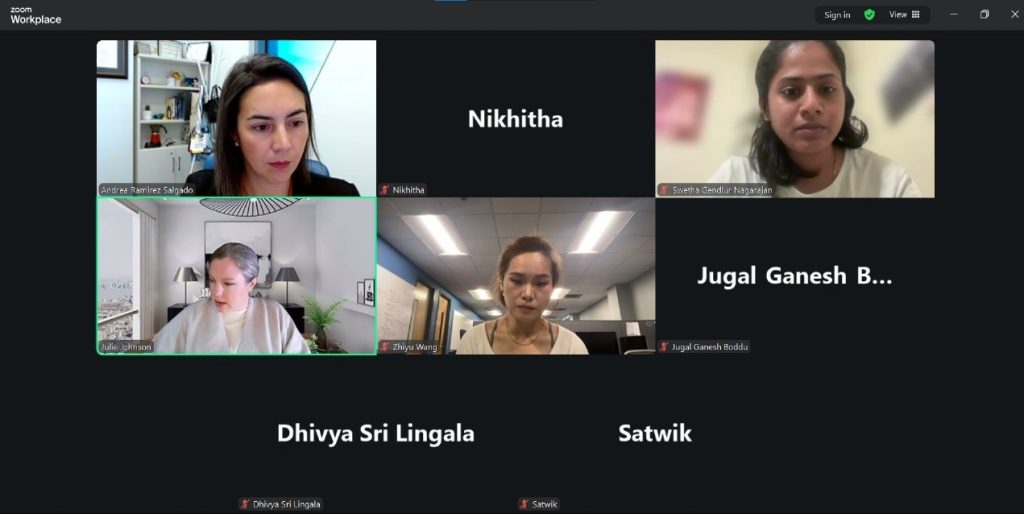
This week marked an exciting milestone for Team 14, our first in-person meeting with our liaison, centered around the Preliminary Design Review (PDR). Meeting face-to-face gave us the chance to connect beyond screens, discuss our evolving design ideas in depth, and receive focused feedback from our sponsor.

Our team with liaison during our first in-person PDR meeting – a milestone moment that energized our collaboration and brought our design discussions to life.

Exploring Paths to Data and Design

In the days leading up to the PDR, the team brainstormed multiple ways to acquire and enrich datasets relevant to lighting lifetime and energy optimization. We also evaluated several web frameworks – including Flask, Django, React, and Streamlit – to determine which best aligns with our project’s end goal. After comparing performance, visualization capabilities, and deployment flexibility, we finalized Streamlit for its simplicity, scalability, and effective data-driven visualization support in order to build the interface in order to explain how the end project looks like.

A Milestone Discussion

Each team member presented their area of progress, turning the PDR into a collaborative exchange of technical ideas and practical insights.

  • Zhiyu shared the team’s dynamic data-modeling approach, explaining how time-based features strengthen the predictive performance of lighting models.
  • Nikitha presented the system design architecture, emphasizing modular structure and smooth data communication between frontend, backend, and pipelines.
  • Jugal demonstrated rule-based and machine-learning lighting-control strategies, proposing a hybrid dashboard for adaptive optimization.
  • Satwik addressed data synchronization, access control, and reliability, highlighting how consistency across modules will support accurate reporting.
  • Dhivya & Swetha explored open-source data integration options to expand model generalization, identifying APIs and datasets for lighting and energy benchmarking.

Looking Ahead

Next week, Team 14 will:

  • Design an ER diagram and feature-correlation visualization.
  • Develop feature-engineering pipelines for energy and dimming analysis.
  • Expand the Streamlit UI with interactive floor plans, tooltips, and energy heatmaps.
  • Finalize the Model Evaluation Plan and confirm our end-to-end tech stack.

Reflections

This PDR meeting was more than a presentation – it was the moment our design vision came to life. Engaging directly with our liaison and sponsor reaffirmed our direction, clarified expectations, and energized us for the next phase. With clearer architecture, richer data, and strengthened collaboration, Team 14 is ready to illuminate the path toward a fully functional prototype.

Tagged as: ,

From Data to Design- Blog#7 10/16/25

Every great product begins with an idea — but this week, our focus was on turning those ideas into tangible design and data progress. The L.A.A.R.K Lite project is evolving from theoretical discussions into a functioning prototype, as we bridge the gap between data intelligence and user experience.

Behind the Scenes: From Exploration to Implementation

This week marked a shift from exploration to structured development. The team focused on cleaning and merging datasets from both sponsor and open-source sources, ensuring that every parameter — from fixture type and lifetime hours to power factor and maintenance logs — was validated and ready for model training.

Parallelly, work continued on the L.A.A.R.K Lite dashboard, where refined UI mockups and interactive prototypes began shaping the look and functionality of our Asset Management and Maintenance Log modules. The feedback from previous wireframe iterations helped us make the design more intuitive, consistent, and aligned with facility management workflows.

On the analytical side, we explored baseline machine learning models for predicting fixture failures, integrating weighted accuracy as a core metric to handle class imbalance effectively. This ensures that our model can identify rare failures with higher reliability, bringing us closer to building a truly practical predictive maintenance system.

From Data to Design: Lessons and Progress

Working simultaneously on both the backend (data processing and ML) and the frontend (UI and visualization) has reinforced how closely design and analytics must align. Clean, reliable data strengthens model output, while a well-designed interface translates that intelligence into meaningful insights for end users. This balance between technical accuracy and usability remains at the heart of our development process.

Moving Forward: Connecting the Pieces

In the upcoming week, the team will focus on:

  • Finalizing the feature set for training the predictive model.
  • Continuing Streamlit UI development to enhance interactivity and layout flow.
  • Exploring additional open-source datasets related to lighting and energy analytics.
  • Preparing a Model Evaluation Plan and documenting UI–data interaction flows.
  • Adding data upload and simulation features to the dashboard for mock testing.

With data pipelines in place, the dashboard taking form, and clear next steps defined, Team 14 is steadily moving toward the predictive maintenance MVP milestone. Each week brings us closer to a platform that combines innovation, intelligence, and design to redefine lighting asset management for facility operations.

Tagged as: ,

Peer Review Preliminary Design Report Presentations – Blog #6 10/10/2025

Presentation week!! This week marked an important milestone for our IPPD Team 14 as we successfully presented our Preliminary Design Report (PDR) for L.A.A.R.K: AI-Enabled Lighting Asset Management Platform for Facility Operations, sponsored by LiteSeeker Solutions, Inc.

our team successfully completed the Preliminary Design Report (PDR) presentations, marking a major checkpoint in our IPPD journey. It was an insightful experience that allowed us to consolidate our ideas, validate our initial assumptions, and receive constructive feedback from our coach, sponsor, and peers.

Preparing for the PDR was both intense and rewarding. We spent several days refining our slides, ensuring that each section, from project objectives and architecture to risk management and roadmap, reflected our collective understanding. Coordinating across multiple disciplines (AI, web development, and BIM integration) helped us see how each part fits into the overall system.

During the presentation, each member contributed to different sections, and the teamwork truly showed. Explaining our design architecture, House of Quality, and technical measures in front of faculty and sponsors built our confidence in communicating complex ideas clearly. We also learned how important it is to balance technical depth with simplicity when presenting to a diverse audience.

The Q&A session that followed our presentation was particularly engaging and insightful. The coaches, TAs, and fellow students asked thought-provoking questions that challenged us to think beyond our prepared slides. Some questions focused on the feasibility of our Revit integration, others explored how our predictive model would handle real-world data variability, and a few addressed user experience and scalability. These discussions not only clarified certain technical aspects but also helped us identify areas that need more detailed validation in our next phase.

Moving Forward!

Based on the valuable feedback we received during the Q&A session from our coaches, TAs, and peers, our team plans to move forward by incorporating those suggestions into our next steps. We will be meeting with our liaison sponsor to discuss the feedback in detail and align our approach accordingly. The focus will be on refining our design decisions, validating our technical assumptions, and ensuring that our implementation plan reflects both the sponsor’s expectations and the insights gained from the review.

System Architecture Progress – Blog #5 10/03/2025

This week our team shifted gears towards research and data preparation for a bigger picture: the system architecture.

We spent a lot of time together at the whiteboard, sketching out how all the pieces connect to our platform. The session went collaborative and lively; we debated over flows of data, clarified what belongs inside the system, and agreed on all the external factors. Revit for lighting asset data, facility managers and technicians as our users, energy usage feeds, and the ML models powering predictions.

This session brought different angles to the discussion. While some of us focused on technical data flows, others emphasized on usability and how the users interact with the system. This mix of perspectives helped us get to the bigger picture with practical details, and made sure that our architecture isn’t functional on paper, but also has a meaningful purpose.

After a long session of redoing things over and over we finally had a System Control Diagram that gave a structure for our project, which highlights the importance of data, generating predictions, producing reports, floor plan overlays, and maintenance alerts. This makes sure that we all are on same page among ourselves as well as with liaison.

What stood out most for us is the clarity we gained from this exercise. Instead of jumping directly into the code and ignoring basic features, we now have a top-level blueprint that anchors the whole project. It also surfaced important questions which we will be tackling further, like how to gather historic data, what should be the features for our prediction model, and what type of graphs should the energy dashboard contain.

MOVING FORWARD!!!

We look to refine this architecture and start mapping the concrete tools and components. This will bring us closer from generating the high-level design to actual dashboard elements and predictive maintenance workflows.

From Confusion to Concept – Blog #4 09/26/2025

Every great project begins with questions. When we first looked at the Scope of Work (SOW) for our project with LiteSeeker Solutions, our team found ourselves in a state of uncertainty. The project seemed ambitious: building an AI-enabled lighting asset management and digital twin platform (L.A.A.R.K Lite) for facility operations. At first glance, it felt overwhelming—new technologies, broad expectations, and many unknowns.

But that’s exactly where the journey started.

Behind The Scenes:

This week, our team split tasks to cover different aspects of the project: Nikhitha and Dhivya reviewed research papers on related work and similar project outcomes, Jugal created wireframes for the dashboards, Satwik explored the tools provided by our liaison, Swetha analyzed the data and pulled out initial insights, and Zhiyu worked with Revit models and the app.

It’s just the beginning, but these behind-the-scenes efforts are setting a strong foundation for what’s ahead. Each piece of work brings us closer to building the Model and understanding the challenges we’ll face along the way.

From Ideas to Action: Shaping Our Project

We began with a deep dive into research papers and case studies that connect to our project goals. By studying related works and similar solutions, we gained clarity on what has already been tried in this space and what gaps still exist. Alongside this, team brainstorming sessions helped us generate and refine ideas, ensuring that we bring together multiple perspectives before moving forward.

To translate these ideas into something visual, we designed wireframes of the dashboard, allowing the team and our liaison to see how the platform could look and feel. These early sketches make abstract concepts concrete, helping us identify what features matter most to facility managers. Through concept generation, we’ve started evaluating different possibilities, narrowing down toward the version that will best serve the project’s objectives.

Since data plays a central role in our solution, especially for predictive maintenance and energy insights, we conducted initial exploration that already gave us useful findings while also highlighting challenges we’ll need to address. On the technical side, exploring tools, APIs, and Revit models has been crucial for testing feasibility and preparing for integration.

This combination of research, brainstorming, design, and technical exploration is helping us transform big ideas into actionable steps toward our final project outcome.

Moving Forward..!!

Right now, we’re at an exciting stage, our foundation is in place. We’ve built a shared understanding of the problem, drafted possible solutions, and created the first visual and conceptual wireframe prototype of the web dashboard.

As our next step, we will be working on the Preliminary Design Architecture. This stage will help us map out the system’s structure, refine the flow between components, and ensure that all the research, wireframes, and technical insights align into a cohesive design. It marks the bridge between ideation and implementation, setting the foundation for development in the coming weeks.

Tagged as: , ,