Every great product begins with an idea — but this week, our focus was on turning those ideas into tangible design and data progress. The L.A.A.R.K Lite project is evolving from theoretical discussions into a functioning prototype, as we bridge the gap between data intelligence and user experience.
Behind the Scenes: From Exploration to Implementation
This week marked a shift from exploration to structured development. The team focused on cleaning and merging datasets from both sponsor and open-source sources, ensuring that every parameter — from fixture type and lifetime hours to power factor and maintenance logs — was validated and ready for model training.
Parallelly, work continued on the L.A.A.R.K Lite dashboard, where refined UI mockups and interactive prototypes began shaping the look and functionality of our Asset Management and Maintenance Log modules. The feedback from previous wireframe iterations helped us make the design more intuitive, consistent, and aligned with facility management workflows.
On the analytical side, we explored baseline machine learning models for predicting fixture failures, integrating weighted accuracy as a core metric to handle class imbalance effectively. This ensures that our model can identify rare failures with higher reliability, bringing us closer to building a truly practical predictive maintenance system.
From Data to Design: Lessons and Progress
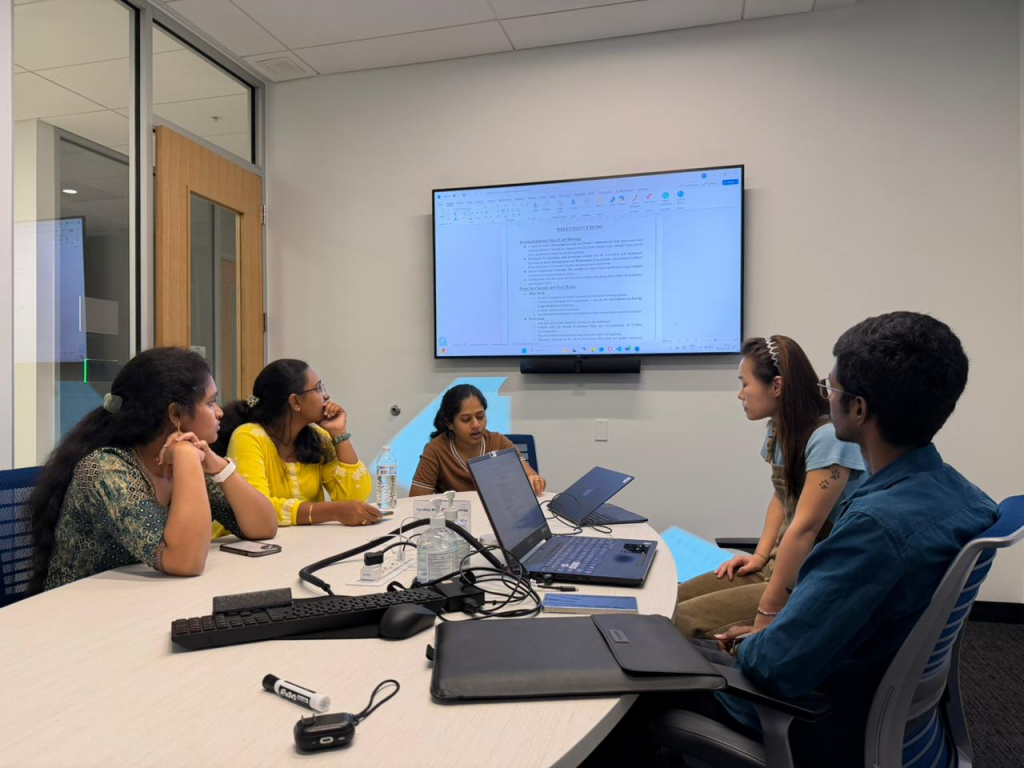
Working simultaneously on both the backend (data processing and ML) and the frontend (UI and visualization) has reinforced how closely design and analytics must align. Clean, reliable data strengthens model output, while a well-designed interface translates that intelligence into meaningful insights for end users. This balance between technical accuracy and usability remains at the heart of our development process.
Moving Forward: Connecting the Pieces
In the upcoming week, the team will focus on:
- Finalizing the feature set for training the predictive model.
- Continuing Streamlit UI development to enhance interactivity and layout flow.
- Exploring additional open-source datasets related to lighting and energy analytics.
- Preparing a Model Evaluation Plan and documenting UI–data interaction flows.
- Adding data upload and simulation features to the dashboard for mock testing.
With data pipelines in place, the dashboard taking form, and clear next steps defined, Team 14 is steadily moving toward the predictive maintenance MVP milestone. Each week brings us closer to a platform that combines innovation, intelligence, and design to redefine lighting asset management for facility operations.