Blog Posts

Week 17: Progress!!

The team made solid progress this week across both the vision and mechanical subsystems, with a particular focus on advancing verification capabilities and preparing for further integration of the wire insertion assembly. Several parallel efforts came together to strengthen the foundation for upcoming testing and refinement.

On the vision side, we continued developing the distal and proximal tip detection algorithms and made meaningful improvements to their performance. In support of this work, we reprinted the full vision verification setup, this time including the external enclosure. This updated build will allow us to better control lighting, camera placement, and part alignment, which are all critical factors for consistent image capture and reliable algorithm evaluation. In parallel, we formally defined the complete set of vision requirements for the system, including pixel size, sensor format, resolution, aperture, and lens specifications. Establishing these parameters provides clear constraints for both hardware selection and future software tuning.

Mechanical progress focused on preparing for additional automation of the wire insertion assembly. We ordered key components including a timing belt, stepper motor, motor driver, shaft collars, and bearings. These parts will enable initial motorized testing and help us assess performance, alignment, and control strategies before committing to a finalized configuration.

The team also presented current project progress during QRB1 and received valuable feedback on both the technical direction and overall system approach. The discussion helped validate recent design decisions and highlighted areas for continued refinement as the project moves forward.

Looking ahead, the team will focus on finalizing the distal and proximal tip vision algorithms once additional image data is collected using the updated verification box. We will assemble and test the newly printed vision verification setup, integrate the recently ordered components into the wire insertion assembly, and design and fabricate additional custom parts as needed based on evaluation of these components. In parallel, we will continue exploring external motorized solutions for vision verification lens adjustment while also assessing whether a commercially available all-in-one camera and lens solution could meet system requirements.

A few action items remain for coordination with the liaison engineers, including sharing the Python script needed for camera API integration, providing additional images of passing catheters to support algorithm development, and completing the When2Meet poll for the upcoming March trip.

Overall, the project remains on schedule, and the progress made this week positions the team well for continued integration and testing in the coming phases.

Here is an image of our CV testing browser:

Week 16 – Subsystems Coming to Life

This week the focus moved from planning stages to implementation stages as numerous subsystems entered into the physical prototype testing phase. Continuing the progress from SLDR and orientation for Spring semester, team members worked on developing hardware, verification tools, and organization.

Mechanically, motor, pulley, and pulley rod holder fixtures were built for the mechanical insertion subsystem. These units represent one stage in proving belt-driven motion/alignment, leading up to a full-scale prototype. Their construction has already aided in determining assembly constraints prior to motor/belt installation.

Advancements were also made on the orientation verification subsystem. A new fixture that is 3D printed to allow for more consistent imaging was made. Additionally, the computer vision algorithm was improved to allow for a higher degree of pass/fail accuracy. These improvements allow us to have greater confidence in our ability to consistently know when a board is oriented incorrectly during testing.

In order to keep track of work-in-progress and future tasks, allowing for better visibility between subteams, the team has started using Trello.

Next weeks activities will consist mainly of documentation and testing. Successes/failures of both mechanical insertion and orientation verification subsystems will be photo/videographed and image datasets run through the updated algorithm and uploaded to M-Box to document pass/fail catheter cases. More computer vision testing will take place using AI manipulated images to determine system strength. Once motors and belt components are received, fixtures will be fit-tested for compliance and liaison engineers have been requested to 3D print current designs out of M-Box to verify functionality before committing to ceramic printing.

Week 15: Jumping Back In

The team returned from a restful winter break, but instead of a cold start, we dived right into new updates on our project. Over break, we modified our designs to utilize the magic of mirrors to create new viewpoints, and developed a new interface for our computer vision (shout out to Sean!). The team’s passion and commitment to this project give us a strong confidence in reaching our goals. In our first week, we attended a lecture discussing the ethical principles of engineering, and discussed our moral codes in the face of unethical dilemmas. We also updated our liaisons on our progress in our first meeting, showcasing our new CAD models, diagrams and software.

This spring, we know what to expect and are planning to approach this semester more tactically. We’ll be implementing new project management strategies, such as Scrum-style planning and sub-team knowledge exchange. Tools like JIRA will help us stay organized within ourselves and also the liaisons, who remain involved and eager to hear from us.

Week 14: SLDR Week!

The team had a major milestone this week, wrapping up our SLDR on December 2nd. The review presented an opportunity to share the current status of our system, walk through design decisions, and receive detailed feedback to help guide the next phase of development. Attendees from Johnson and Johnson and the University of Florida discussed various aspects: physical architecture, bill of materials, verification strategy, preliminary manufacturing considerations, early prototype results, and overall project planning. Feedback was positive and shed light on multiple technical priorities in the coming months.
Much of the review was confirmation of the direction of our mechanical and vision subsystems. The panel agreed that it was reasonable to continue the development of a cooking fixture and its camera mount because of its importance in ensuring uniformity in the handling and alignment of components for making a catheter. Strong support was given for the creation of a formal verification box concept, which will facilitate orientation checks and camera alignment by providing a controlled environment in which to take images and perform calibration. This will be important both during algorithm development and in system integration.
The team also confirmed the path forward for completing the one-to-one scale prototype using motors, timing belts, and pulleys. Parts have already been ordered for this build using the existing budget, and the review reinforced the importance of demonstrating the full mechanical assembly in Spring. This prototype will form the basis for validating subsystem interactions and preparing for more advanced automation work.
On the software and sensing side, the reviewers supported our current computer vision approach to detect the copper wire and to identify the proximal and distal tip of the catheter. Iteration of these models will continue to be critical for reliable part verification across a large variation in catheters. Testing will be expanded to include correct and incorrect samples so the vision pipeline can be evaluated against real sources of variation.
Based on the results of the SLDR, we proposed a very clear path forward for each of the subsystems. On the mechanical side, the next few weeks will involve updating the CAD for the cooking fixture and camera mount, printing revised prototypes, and checking functionality. In parallel, concept drafting and a test plan for the verification box will start, along with initial bill of materials planning. The remaining parts for the one-to-one prototype will be assembled as they come in, and the team will start alignment and bring-up testing. Vision work will continue to include model tuning and expanded sample evaluation, while the BOM will be updated to reflect confirmed components and lead times.
All said and done, the SLDR was a productive and energizing moment for the team. The review validated our direction and provided clarity of expectations for the next phase, while strengthening our alignment across mechanical, software, and verification efforts. The insights gathered will be incorporated into the final SLDR report and will help in guiding our work into Spring.

Week 13: SLDR Prep!

The team made steady progress this week as we continued refining both the mechanical and sensing components of our system while preparing for several key milestones in our development timeline. Building on feedback from recent discussions, we focused our efforts on technical improvements, documentation, and early-stage testing that will inform the next phase of the project.

One of the primary accomplishments this week was drafting the SLDR, which will serve as an important reference point for aligning our design choices, subsystem responsibilities, and project direction. We also met with Dr. Stubbs to review our overall system architecture and motor requirements. This discussion helped clarify several design considerations and provided guidance for the mechanical and control decisions we will finalize in the coming weeks.

On the prototyping side, we began purchasing the remaining components needed to automate the current prototype. These parts will allow us to progress from manual operation toward a more complete representation of the intended system behavior. In addition, we received and assembled new catheters for testing and were able to verify that the prototype continues to function mechanically as expected.

We also made adjustments to the cooking fixture to address concerns raised during the previous meeting. These modifications will support improved alignment and should contribute to more consistent handling of the catheter components. In parallel, we began preliminary testing aimed at detecting electrodes within catheter images. These early tests will help guide improvements to the image processing pipeline and build toward more consistent and reliable computer vision performance.

Looking ahead to next week, our priorities include completing the SLDR, acquiring the remaining parts before the holiday period, improving the vision system’s performance on lower quality images, and continuing iteration on the cooking fixture based on the week’s feedback. The team will not be meeting next week due to the Thanksgiving break.

Here is a picture of our new computer vision progress:


Week 12: PDR week!

The team continued to make meaningful progress this week as our work shifted further from preliminary investigation into detailed design development and prototyping efforts. Building on insights from recent discussions with Johnson & Johnson, we advanced several parallel tracks of the project that will inform both our near-term deliverables and long-term system integration.

One of the major developments this week was the construction of a full-scale mechanical prototype of the wire insertion assembly. Creating this physical model allowed us to evaluate clearances, motions, and potential points of interference within the system. In parallel, we completed a comprehensive CAD assembly of the prototype, which provided additional clarity on areas of concern and highlighted design limitations that might not be immediately evident from physical inspection alone. Together, these efforts strengthened our understanding of the assembly’s mechanical requirements and constraints.

We also made notable progress in the software and sensing components of the project. Using the latest image set provided by J&J, the team enhanced the performance of our computer vision pipeline for detecting copper holes. These preliminary results helped us refine our approach and prepare for the transition from MATLAB to an OpenCV-based implementation. Alongside this work, we conducted an evaluation of several potential cameras, comparing them across relevant performance criteria to determine which option will best support the vision verification workflow. This analysis informed the initial concept design for the vision verification box, which will house and align the sensing components in future iterations.

In addition to these technical advances, the team began planning for the next stages of procurement and assembly. We identified the remaining components needed to complete the manual assembly of the full-scale prototype and will incorporate final camera dimensions into the verification box design once a selection is made. These steps help ensure that mechanical and sensing subsystems evolve cohesively as development progresses.

Looking ahead, the focus for next week will be on fine-tuning the computer vision algorithm, initiating the software transition to OpenCV, finalizing camera selection, and acquiring the parts necessary to complete the prototype. Coordination efforts will also continue, including arranging transport of materials from Jacksonville to Gainesville and confirming dates for the next SLDR site visit.

Overall, it was a productive and technically rich week for the team. The progress made in both mechanical prototyping and vision system development positions us well for continued advancement in the coming weeks.


Due to delays with travel arrangements, we gave our PDR during our regularly scheduled liaison meeting time and it was a success and our liaisons gave us some great feedback we hope to take for the SLDR coming up this week!

Week 11: PID Day!

This week marked steady progress as we continued developing both the mechanical and computer vision components of our wire insertion system. During Prototype Inspection Day, we presented our current design to professors and industry professionals. The feedback we received was constructive and helped us identify areas to refine as we move forward.

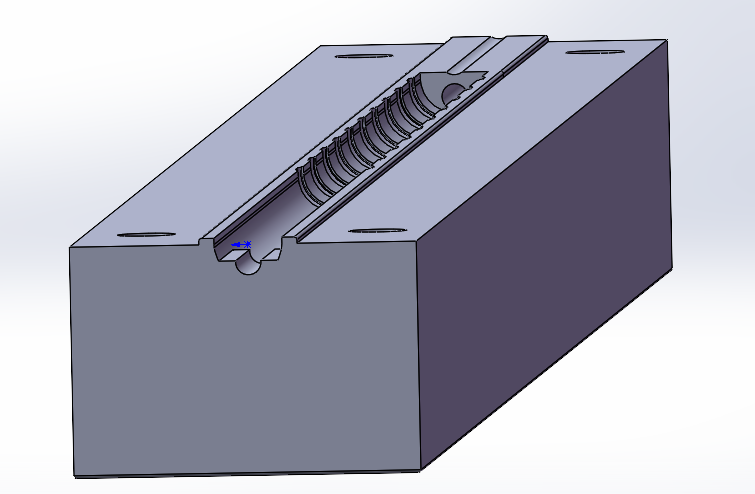
On the mechanical side, we updated the cooking holder CAD model and began making parallel progress on the camera mount fixture. We are also working on scaling down the assembly, with particular attention on finalizing the lumen holder and feeder wire clamps, which will play an important role in stability and accuracy.

Earlier in the week, we reviewed our computer vision strategy as a team. The approach is moving in a good direction, and we are preparing updates to share in our next progress review on Friday.


Plans for Next Week

  • Print and test the first version of the camera mount fixture, then make adjustments as needed.
  • Continue building out our computer vision codebase and improving detection performance.
  • Begin integrating components into the full-scale wire insertion model to transition from individual prototypes to a unified system.
  • Order the correct camera hardware so that future testing can be performed under realistic operating conditions.

Open Items for Liaison Engineer(s)

  • Finalize outstanding PDR documentation and details.

Project Status: On Schedule

We are maintaining steady momentum and remain on track with our planned development timeline. More updates will follow next week as we begin initial integration and testing.

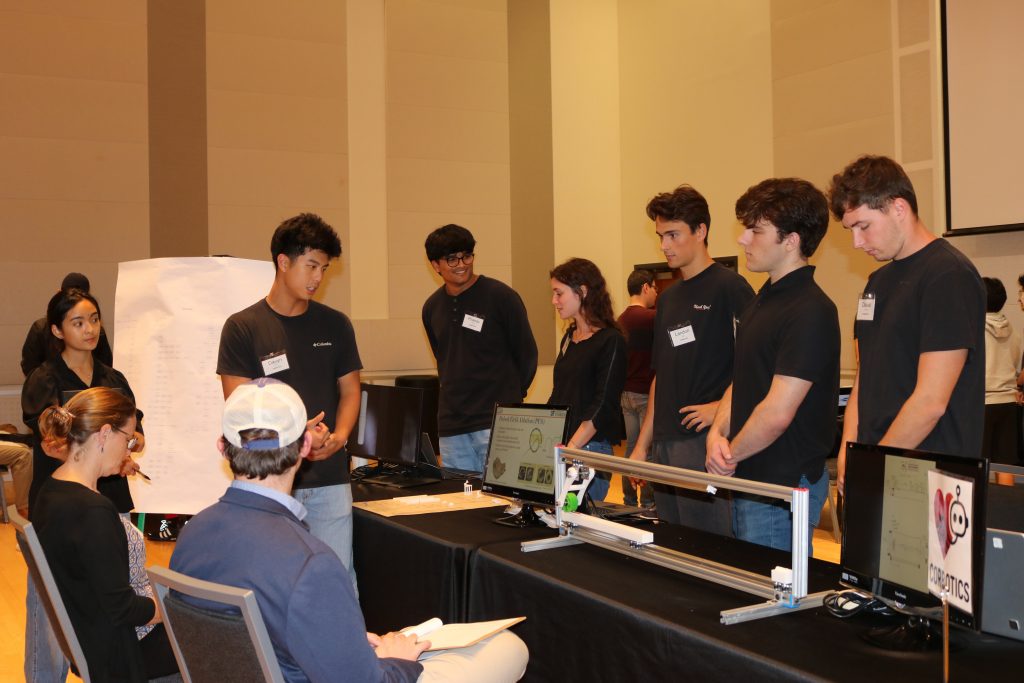
Here is our team during our PID presentation:

Week 10: Preparing for Prototype Inspection

Team CORBOTICS has continued to focus on design for fixtures, integration of subsystems, and preparation for testing in anticipation of Prototype Inspection Day. During this week, the team worked to improve the reliability and repeatability of our fixtures, verify our process flow, and synchronize efforts between the mechanical, computer vision, and automation subteams.

Corrections were made to the lumen holder fixture that positions and secures the catheter lumen during automated assembly, based on feedback from our liaison at Johnson & Johnson’s Biosense Webster division. The fixture’s wall height was increased to provide additional lateral support and further prevent misalignment during testing. The fixture’s reliability and repeatability were the target mechanical properties, as these are necessary for a successful automation process.

Mid-week, some team members made a field trip to a robotics team in Lakeland to learn more about their automation setup. They were able to experiment with parts, test various mechanical interfaces, and brainstorm potential design solutions that could work with our system. Additionally, they were able to return with some spare parts and material that they were able to salvage and will be used in our prototype build. The team expects this component to push progress forward leading up to Prototype Inspection Day.

For members who were unable to attend the trip in person, those on campus followed up by discussing and sharing photos and notes from the team’s time at the other robotics team. The team’s general knowledge of the potential design elements to make a design simpler or how to re-purpose existing mechanisms has increased.

Our cooking fixture and holding fixture have been modified according to the finalized Process Flow Chart, which details every step of the manual assembly of the catheter. This visual reference has proven useful for determining where the team needs to automate steps and integrating all of the subsystems.

The computer vision subteam has continued to make progress on detection and labeling tools using OpenCV. We have been able to make these corrections to further optimize OpenCV for our fixture changes.

Team CORBOTICS is working toward tightly synchronizing the mechanical fixtures, computer vision tools, and control systems as a complete automation process. The next steps in our preparation are system testing and finalizing our design documentation before inspection.

Week 9: Rolling Into Motion

Given what we learned from the experts at J&J last week, we’ve adjusted the fundamental goal of our concepts and developed our first version of a holding fixture. We learned exactly what features on the catheter the technicians look for during quality checks, so we incorporated space for them in our design.

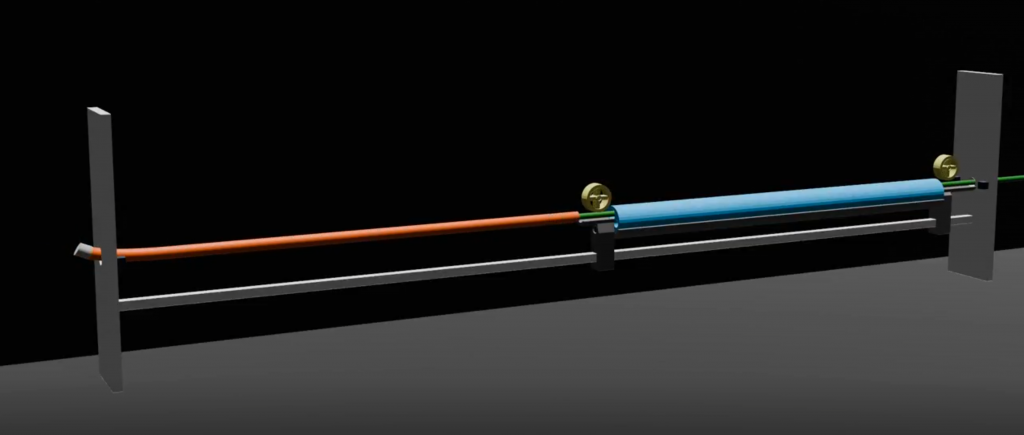
Compared to a couple weeks ago, many of the features we planned for wire insertion were removed or altered to better address the problem. We brought the updated concepts to life through animation. As seen below, it’s quite a difference; simpler is better!

To keep track of what we’re automating, we created a flowchart mapping the entire assembly process from start to finish. This way, we can highlight the exact steps our mechanism performs that are currently done by a human. Collaboration with the liaison is vital for understanding the work to be done, since this visual aid was based on the provided documentation.

We’ve also begun diving into the software side by testing out computer vision tools like OpenCV, and exploring how the libraries work with shape detection and image labeling.

Next week, we’re starting on the design, testing, and evaluation of our other fixtures in the system. In fact, some are being 3D printed right now… Stay tuned to see how they turn out!

Week 8: Project Plan Updates and First Fixture Development

The team made a pivotal transition this week from our high-level research into narrowing the scope and moving towards a specific direction of our design. Following our visit to the Johnson & Johnson site last week, we started to make the transition to concrete deliverables in a multitude of different project avenues.

We updated the Project Plan document to include our final project scope and implementation details so that the documentation would be on par with our enhanced understanding of the catheter assembly process and short-term design goals.

One of the major technical developments this week was fabricating a first iteration of a fixture to cook the loop tip. As discussed in last week’s blog, the creation of this fixture prototype will be pivotal to successfully automating the most manual and fragile portion of the catheter manufacture. We also continued to perform our process flowcharting of the wire insertion and assembly. In particular, we filled out the flowchart with all the required process steps, specifically denoting the steps that we anticipate are more amenable to automation. We have already found this to be useful in directing the development of the loop tip cooking fixture and allocation of subsystem responsibilities.

We also started to make headway on the software and sensing areas of our project, as we developed a preliminary computer vision proof of concept (PoC) to test component detection capabilities. We ran a few early sample tests on images, which were successful and will guide our implementation of vision tools for part orientation and verification later this semester.

Lastly, we researched a new method of nitinol wire insertion and orientation verification, which will provide a basis for the team to assess an alternative process’ capability for improved precision and repeatability. We will incorporate these learnings into testing and validation efforts as well.

All in all, it was a very productive and technically dense week for the team. We were able to make the transition from our initial brainstorming/planning phase and into prototype development and analysis, which sets the stage for next week’s work as well.