This week marked an exciting milestone for our IPPD team as we participated in Prototype Inspection Day (PID) at the University of Florida. During this event, we presented our project to a panel of IPPD alumni, technical professors, and academic professionals, sharing our progress and receiving valuable feedback to guide our next steps.
Our 20-minute presentation focused on outlining our project’s purpose, technical development, and future plans. We received two main categories of feedback: the first centered on presentation delivery, including our professionalism, clarity, and how effectively we communicated complex ideas. The second set of feedback involved technical insights, such as potential improvements to our design and simulation methods. Both types of feedback were incredibly helpful and will directly influence how we refine our project going forward.
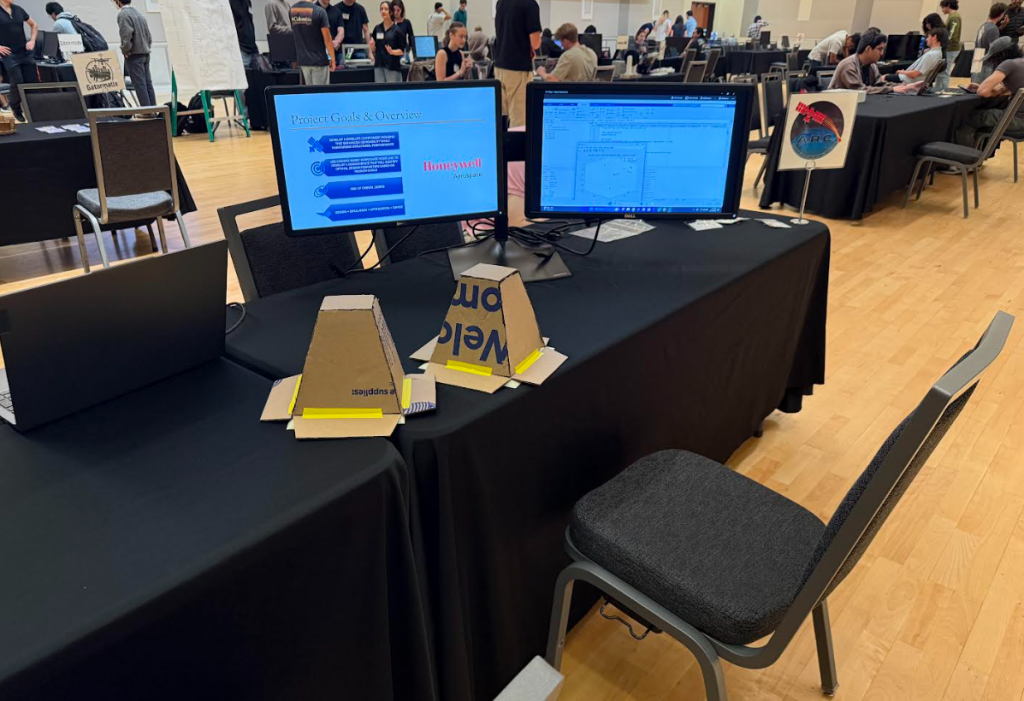
In preparation for PID, our team put in extensive hours of effort, especially in running and finalizing our first Ansys Fluent simulation. This process took nearly 15 hours from setup to completion. Most of that time was spent learning the software’s various features, setting appropriate parameters, and understanding the computational fluid dynamics behind our system. Running this simulation marked a key step toward validating our design under re-entry conditions.
During our weekly meeting, we also discussed the assumptions and simplifications we will use in future simulation runs. Because our project involves complex re-entry dynamics, finding the right balance between realistic modeling and manageable scope has been a constant challenge. Our goal is to keep simulations as close as possible to real conditions while ensuring they remain achievable within our time and resource limits.
Overall, PID was both rewarding and challenging. Condensing months of research, design, and testing into a 20-minute presentation was no easy task, especially given how intricate our system is. Some audience members found it difficult to grasp all the technical details, which reminded us of the importance of clear communication and strong visuals when explaining complex engineering concepts.
As we move forward, we’re taking these lessons to heart. Our team plans to focus on improving how we present technical content, refining our simulation accuracy, and ensuring our design continues to evolve in line with both academic rigor and industry relevance. Prototype Inspection Day was a defining moment and a chance to see how far we’ve come as well as how much potential lies ahead.