Blog Posts

Week 20: Coming to life

On the mechanical side, the frame and gear teams teamed up to start building out the gear train casing, adding structure around one of the most important parts of the hoist. Mounting locations were finalized to securely connect the device to the pulleys and pocketbook grip, which makes everything feel a lot more real and a lot less theoretical. The pulley and rope team also continued refining procedures for load cell calibration and pulley efficiency testing so that when we collect data, we can trust it. The gear train is starting to look like something you would actually expect to find inside a machine, and we grow more confident in the products potential day by day.

Electronics had a big week too. The PCB schematic is officially complete, which is a major step toward cleaning up wiring and making the system more organized. A lot of thought went into isolating grounds in the design, since electronics can get a little wonky when they sit next to high powered components. The finished schematic is included above. Programming the motor begins soon, and communication between the microcontrollers is already working smoothly. The next step is getting that communication talking to the motor controller so we can finally make things move.

We also updated the BOM to reflect the current state of the design, confirmed load cell calibration procedures with our Civil Engineering contact, and are preparing to conduct a patent search to better understand where our design sits in the broader landscape.

With the gear train taking shape, electronics cleaned up, and motor programming about to begin, the hoist is steadily transforming from a collection of parts into a real working system.

Tagged as: ,

Week 19: Testing plans and Improvements!

LineTech had another productive week as progress continued across the mechanical, electrical, and software sides of the project. The core control system is now up and running, with the hoist and remote able to communicate and share load information, which puts us in a great position heading into the next phase.

On the mechanical side, we went through yet another frame redesign and are now very close to a configuration we feel confident putting under real tension. With the frame design converging, we are also closing in on calibrating our load cell. Once calibrated, it will be used to measure loads during upcoming pulley efficiency testing, letting us move from theory to real data.

Electronics are also coming together quickly. PCB work is almost complete, which will clean up wiring and make the system much easier to integrate. At the same time, we are starting to bring in high voltage components and get a big motor moving, which is an exciting shift from small bench-top components to something that actually looks like a hoist.

We have also been working closely with the Civil Engineering department and are planning some time in their lab. This will allow us to safely calibrate the load cell and run pulley efficiency tests using proper equipment and space.

With software nearly wrapped up, PCBs almost ready, and the mechanical system getting closer to full assembly, the project is starting to feel very real. The next stretch should involve lots of data, lots of iteration, and plenty of hands-on work.

Week 18: Load Cells, Faculty Feedback, and Forward Motion

LineTech wrapped up another busy week with our first QRB, where we got useful feedback and some extra direction from faculty reviewers on our project plan and technical approach. One of the biggest takeaways was clearer guidance on our FEA analysis. We also connected with a few professors who offered to look over our simulations as we continue refining the frame design.

On the mechanical side, things are starting to get exciting. We are getting ready to run pulley efficiency tests in the near future, and we are also preparing to build a wooden frame prototype. At the top of this post is a picture of a very, very large dynamometer that we will be using to calibrate our load cell and test pulley efficiency. Right next to it is our load cell actively giving output, which was a great sight to see and a good sign that things are coming together.

Electronics and software made solid progress this week as well. The software is starting to come together, and we successfully got our load cell up and running and reading data. Seeing real numbers come off the system for the first time was a big milestone and a nice confidence boost.

With QRB feedback in hand, testing coming up soon, and hardware and software finally working together, the project is starting to come together as we move deeper into the build phase.

Week 17: Time to Build!

Improved frame design and breadboarded electronics

LineTech had another busy (and exciting) week as the build phase of our automatic transmission line hoist continued to ramp up. Between redesigns, calculations, and hardware starting to appear on benches, things are finally feeling very real.

On the mechanical side, we rolled out a new frame design and ran it through FEA to make sure it can comfortably handle the tension forces we’re aiming for. We also put together a new spur gear reduction design and crunched the numbers to confirm it’ll do its job. Updated spool calculations helped clean up our manufacturing plan and made the next fabrication steps a little clearer.

Electronics officially joined the party this week, with the team starting to breadboard components and turn schematics into something that actually exists. With wires, resistors, and micro controllers now in play, programming is right around the corner.

We’re also gearing up for our first QRB, where three faculty members will take a look at our project plan and help keep us honest about schedules, risks, and next steps. We’re excited to get their input as we keep moving forward.

Next week, the plan is to finalize preliminary efficiency testing plans, fabricate a wooden frame prototype, start rope and pulley efficiency testing, and order gear materials. All in all, it’s been a fun, fast-paced week, and we’re looking forward to building even more momentum from here.

Tagged as: ,

Week 16: Getting Ready to Build!

LineTech is officially back after winter break, and this week marked the start of the spring build phase for our automatic transmission line hoist. With the new semester underway, parts have begun arriving in the lab, making it feel like Christmas came a little late this year. After a full semester focused on design, analysis, and planning, it’s exciting to finally start working with real hardware.

This week was spent receiving and organizing components, reviewing assembly plans, and preparing our workspace for integration. As parts arrive, we are verifying specifications and checking fit against our CAD models to ensure everything is ready for assembly.

Among the deliveries was an oversized steel hook, which meant some poor delivery driver had to lug around a rather silly, over-scaled piece of hardware just to get it to our lab. It was a fun reminder of the scale of the loads our system is designed to handle.

Looking ahead, the team will begin assembling and testing individual subsystems before moving toward full system integration. With parts now arriving steadily, the transition from design to build is officially underway, and we’re excited to see everything start coming together.

Week 15: Halfway to the Finish Line!

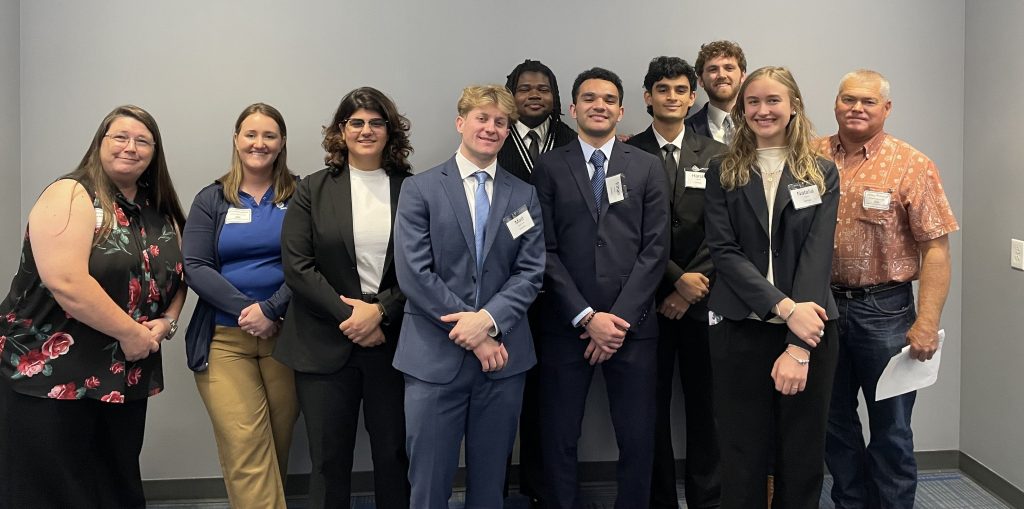
The LineTech and FPL team after the System Level Design Review.

LineTech came back from a restful Thanksgiving break with full steam ahead. With valuable feedback implemented from the peer review, we course corrected and clarified some important aspects of our project and presentation. Final improvements to the SLDR report were made with FEA models, efficiency calculations, and preliminary testing protocols. Clarifications of the problem areas were made in our presentation’s problem statement. 

After working hard on our material, SLDR day went by without a hitch. The team enjoyed networking, participating in the interactive keynote, and watching fellow groups’ presentations. Once the presentations concluded, the best project liaisons ever, Natasha, Olivia, John, and Justin (in spirit), took the whole LineTech team out to dinner at Dragonfly Sushi & Sake Company in downtown Gainesville. At dinner, we celebrated the team’s successes and discussed the future plans for the project over delicious sushi.

The LineTech team would like to end the semester on a high note and wish all IPPD teams a peaceful winter break and good luck in the coming semester. Happy holidays! 

Week 13: Busy Bees!

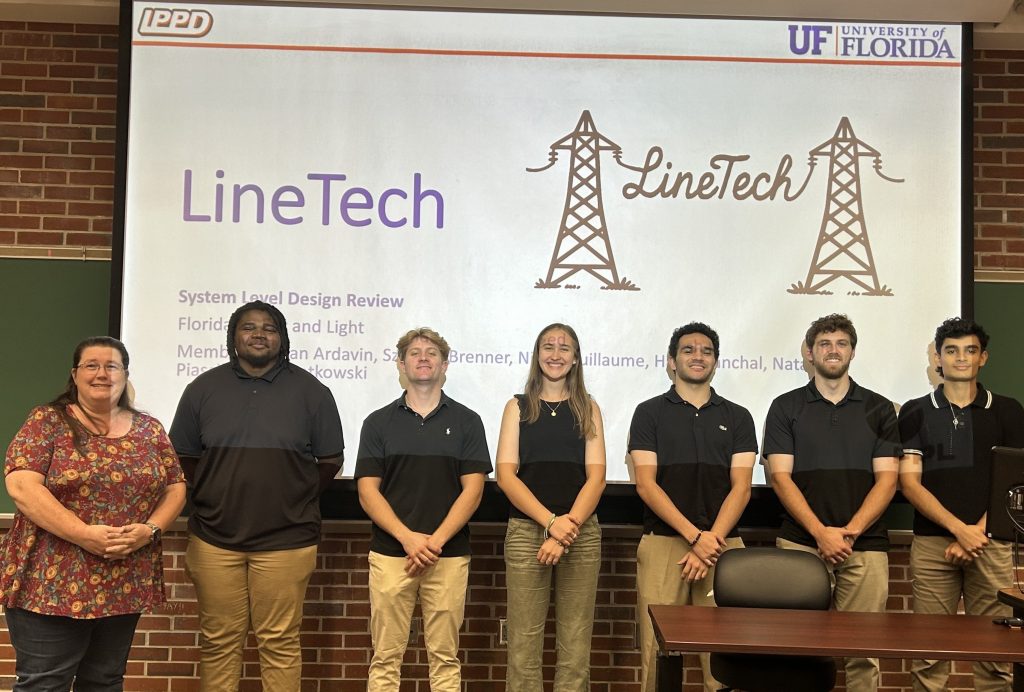
LineTech after the peer review SLDR.

This week started off strong with our System Level Design Review (SLDR). After wrapping up our draft document and presentation on Sunday and Monday, we presented on Tuesday and received valuable peer feedback, especially around the frame design of our device. Later in the week, some team members headed to the prototyping lab to cut into the aluminum stock we received from FPL, confirming that it is suitable for constructing our spool. 

On Thursday, we met with Justin, our liaison from FPL, over lunch at The Flying Biscuit Café. We shared the latest version of our SLDR and gained insightful feedback, including advice to strengthen our testing processes by accounting for higher temperature maximums and wind speeds. With Thanksgiving break ahead, next week will be a rest period before we return to continue refining our design. Wish us luck as we move forward! 

Week 12: Design Refinements and Testing Realignments!

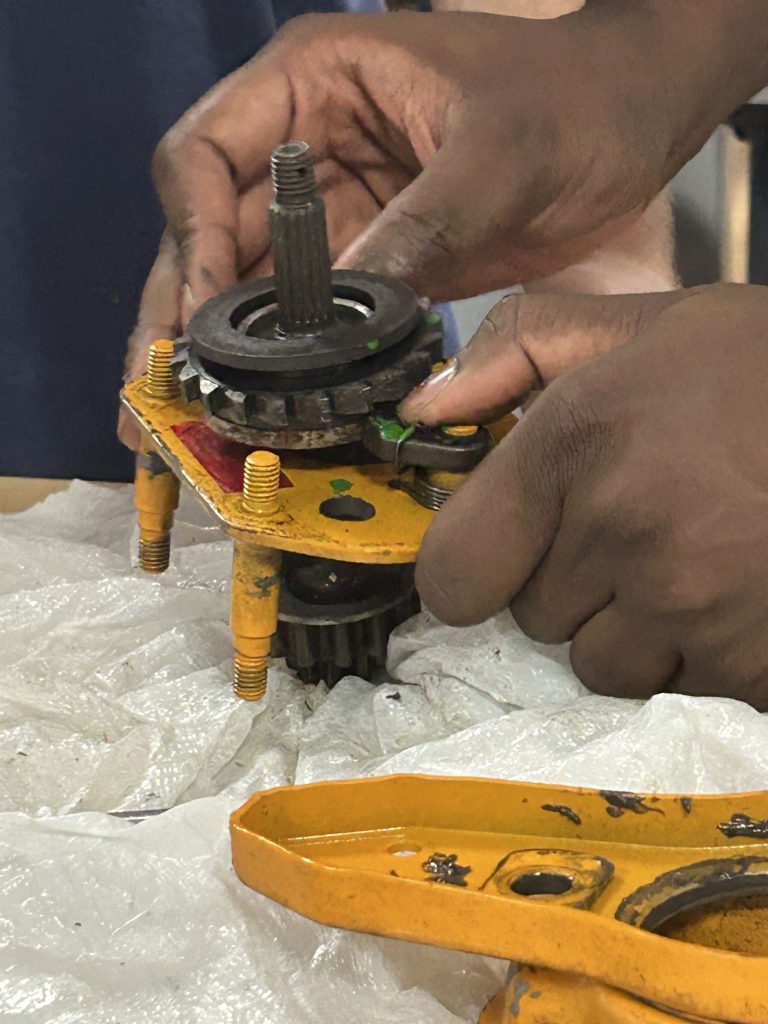
Disassembly of a Harrington hoist.

This week, LineTech made meaningful progress on our System Level Design Review (SLDR) report, building on the insights gained last week during Prototype Inspection Day (PID) and our disassembly of the FPL-provided hoist. The hands-on teardown offered valuable insights on real-world component integration, informing both our documentation and design decisions. 

During PID, several questions emerged regarding our testing strategy. In response, we began outlining feasible procedures to validate system performance. At the forefront of our testing plan is a high-capacity Universal Testing Machine, which we’ve identified as a strong candidate for evaluating the performance of our subsystems as well as final device. We also defined preliminary methods for assessing the efficiency of individual components which are essential for ensuring reliable system performance. 

The lessons from PID and the hoist analysis resulted in updates to our CAD models. We also conducted efficiency calculations for some key subsystems, helping us better understand the performance trade-offs within our design. 

In the coming month, we’ll be focused on refining subsystem details in preparation for the upcoming peer review. This milestone will be instrumental in providing constructive feedback as we continue to iterate and improve. 

Week 11: Prototype Inspection Day and Progressions!

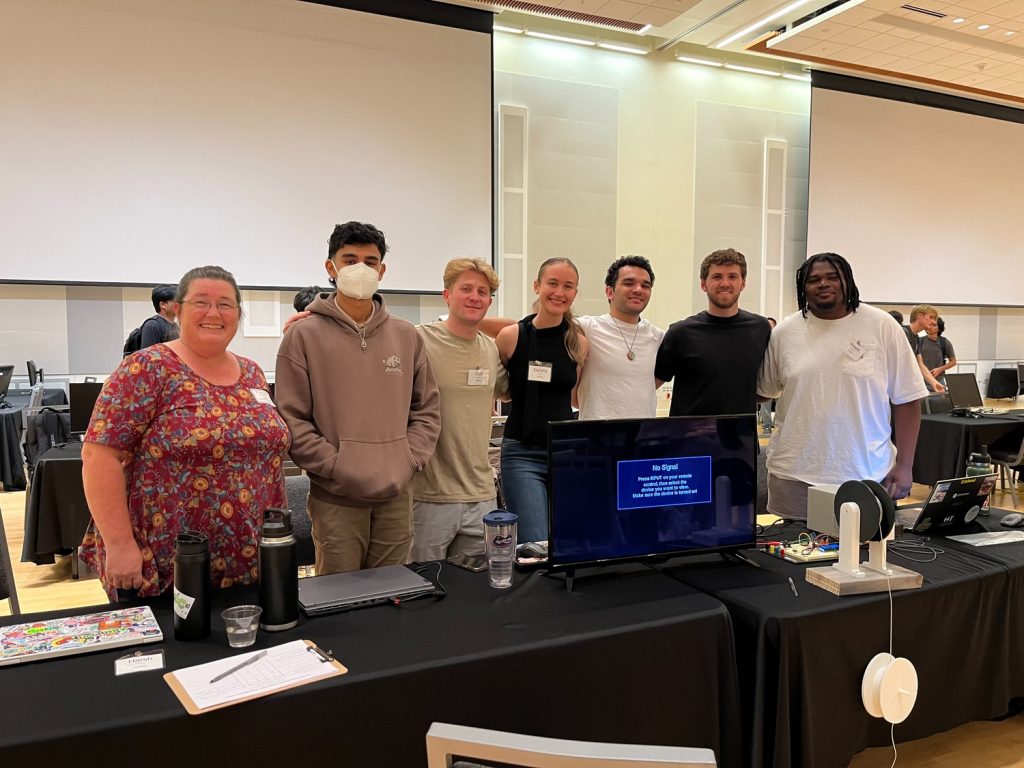
The team at Prototype Inspection Day.

What a week! On Tuesday, November 4, 2025, we presented our prototype and subsystem plans to faculty experts in the Rion Ballroom at the Reitz Union. The experience was incredibly rewarding, providing us with valuable feedback on both our technical concepts and presentation skills. One key takeaway was the need to develop a safe and practical method to test our hoist, which must withstand up to three tons of force. Identifying a testing solution will be a major focus as we move forward. We’d like to thank all the faculty members and former IPPD students who took the time to attend our presentation and share their insights.

Later in the week, we disassembled a ¾-ton manual hoist provided by our liaisons. This hands-on activity gave us a better understanding of the hoist’s internal mechanisms and friction brake system, which closely align with aspects of our own design. Examining the ratchet-and-pawl and braking components also helped us identify parts we may adapt for our prototype to help reduce costs.

Looking ahead, our team is applying the lessons learned from both the PID feedback and hoist disassembly to refine our design. We are updating our CAD models, conducting stress analyses, and continuing to ensure that safety and functionality remain top priorities.

Tagged as: , ,

Week 10: Prototype Preparations!

Prototype model for demonstration at PID.

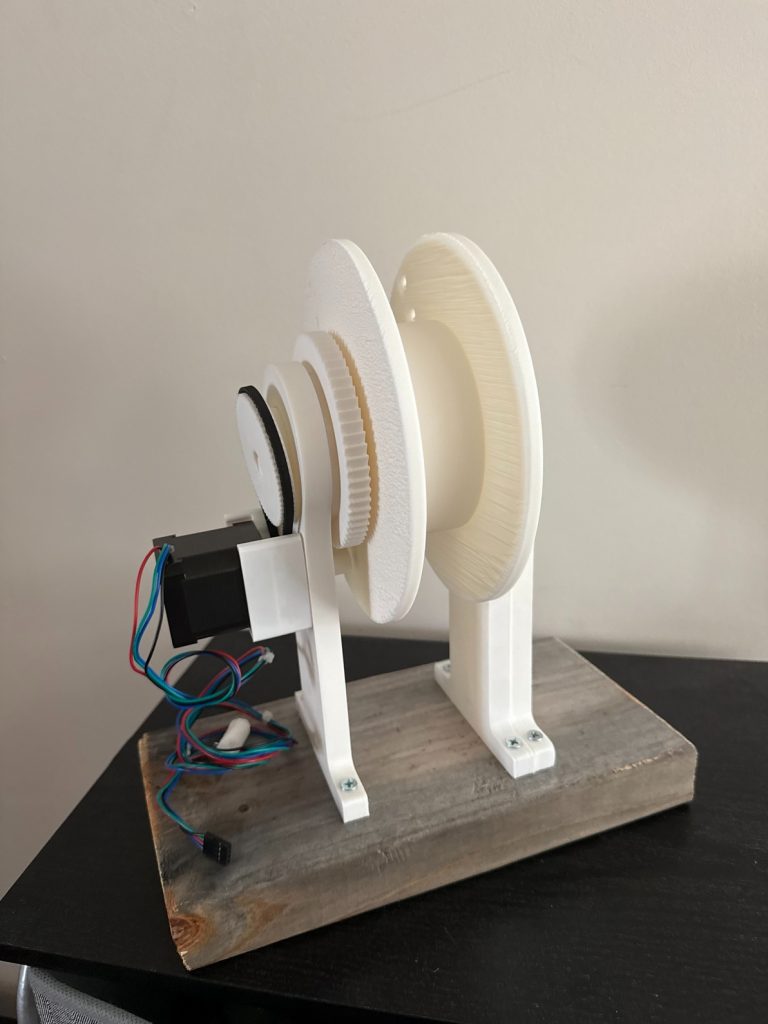
Onward and forward! With Prototype Inspection Day (PID) coming next week, the team has been busy planning, 3D printing, and assembling our first prototype. The goal of our prototype is to test the concept of using a friction brake to reverse the direction of the spool to sag a line. We are using 3D printed parts along with twine and a motor to prove that our idea can both tense and sag a specified weight. We look forward to presenting our prototype to the judges and receiving any feedback that we can then use to improve our concept.

The team also plans to bring subsystem ideas to PID to receive additional feedback from the judges. Included are the frame and rope guide subsystems. This is a great opportunity to get suggestions from faculty specialists, and we are planning on making the most of it. Our coach, Dr. Kimberly Stubbs, has been an amazing mentor thus far in providing guidance and support throughout the process. At our coach meeting this week, she provided several forms of insight that we have been working to implement as we’ve progressed.

Looking to the future, LineTech intends to use feedback given at Prototype Inspection Day to further our concept and make improvements. SLDR is coming up in the near future and we plan on continuing our path towards success.

Tagged as: ,