Prototype Inspection Day
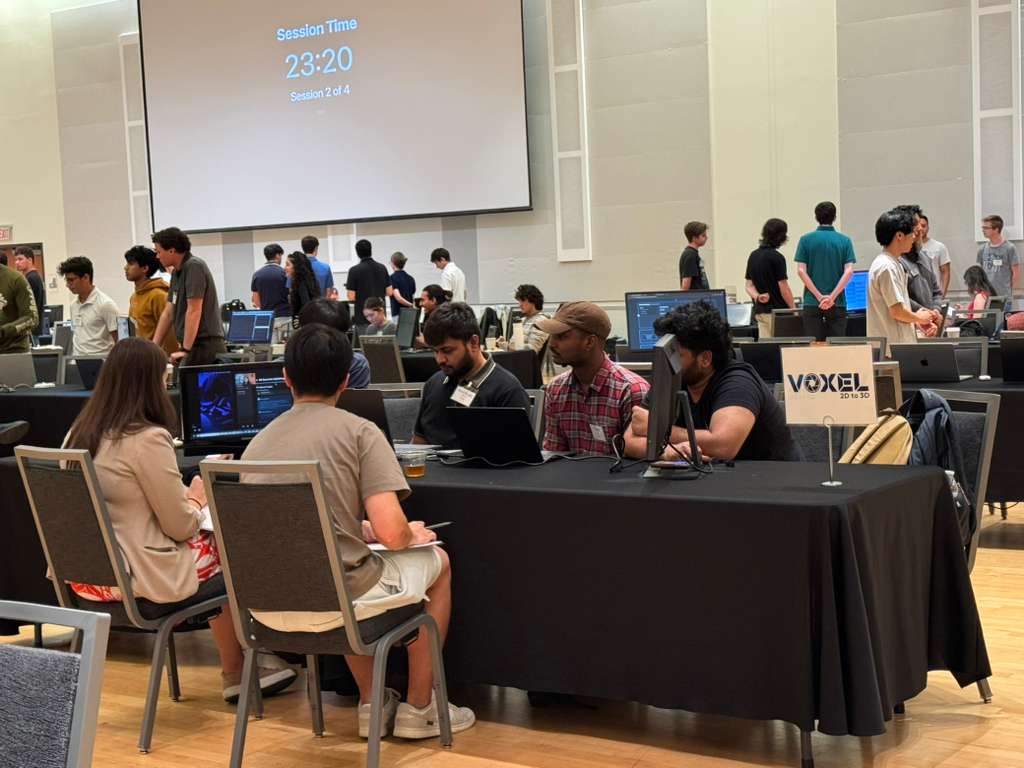
This week was all about Prototype Inspection Day (PID). Our team presented the VOXEL O2A pipeline to six judges and walked them through how we turn phone captured images into 3D assets. Two of us presented online while the rest of the team was in person, so it ended up being a mix of virtual and live interaction, but everything ran smoothly. The overall response was very positive. A few judges even mentioned that the project felt 99% there, which made us feel confident that our idea and pipeline are on the right track.
At the same time, the feedback clearly showed where we can improve. The judges wanted to interact with our results instead of only seeing static screenshots. They asked to rotate the 3D models, view them from different angles, and understand what the final user experience would look like. They also suggested that we show clearer comparisons against baseline methods like NeRF and COLMAP, include metrics such as PSNR, SSIM and runtime, and add more context about our segmentation and evaluation setup. We also realized we need to balance our presentation style. Some people felt parts were too technical, while others wanted more detail, so we plan to layer our explanations for different audiences.
Looking ahead to next week, we want to turn this feedback into concrete progress. On the technical side, we will keep moving toward a stable end to end mesh and texture pipeline, test mesh extraction methods like Poisson and Ball Pivoting in Meshlab, and see which ones give cleaner assets. We will also start running 3D Gaussian Splatting on the NeRF synthetic dataset and explore Unity based visualization so people can view and rotate our reconstructed meshes directly and compare quality and runtime. In parallel, we will begin drafting the SLDR and make sure it clearly explains our testing strategy, roadmap and baselines so VOXEL O2A feels less like a demo and more like a product ready workflow.